Business Development
(224) 213-5119
General Information
(513) 776-1078

Key Highlights
- Understanding the causes of truck delays is the first step toward improving warehouse management.
- Partnering with a third-party logistics (3PL) provider can significantly boost your operational efficiency.
- Implementing a dock appointment system streamlines the arrival and departure of trucks, reducing wait times.
- Leveraging technology like warehouse management software enhances visibility and control over your supply chain.
- Optimizing your inbound processes is crucial for smooth order fulfillment and overall logistics services.
- Continuous analysis and improvement of your warehouse operations are key to long-term success.
Introduction
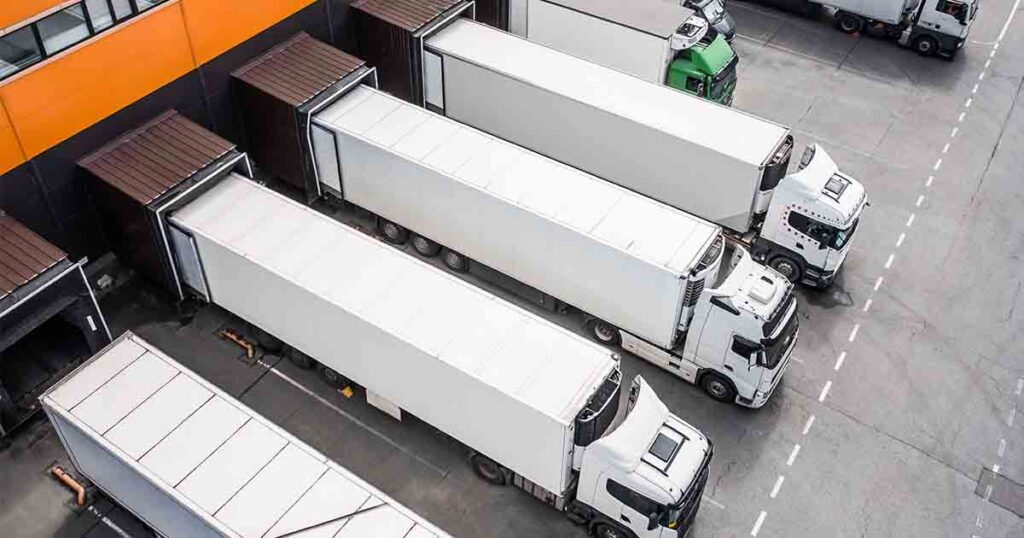
Are long lines of trucks waiting at your warehouse docks causing headaches? You’re not alone. Inefficient dock management can create bottlenecks that ripple through your entire supply chain, leading to frustrated drivers, delayed shipments, and increased costs. Improving your warehouse and transportation management is essential for a smooth operation. This guide will walk you through practical strategies and solutions to reduce truck waiting times, enhance efficiency, and keep your supply chain management process moving seamlessly.
Understanding Truck Waiting Time at Warehouse Docks
Truck waiting time, often called detention or dwell time, is the period a truck spends at a facility waiting to be loaded or unloaded. These delays can disrupt schedules and increase costs for everyone involved. Efficiently managing this time is a core challenge in logistics operations.
Understanding the root causes of these delays is crucial for effective transportation management. A third-party logistics (3PL) provider, which is an outsourced service that handles aspects of your supply chain, can offer expertise in this area. By using tools like a warehouse management system, you can start to identify and address the bottlenecks causing these costly waits. We will now look into the specific causes of delays, their impact, and other common challenges.
What Causes Delays at the Warehouse Loading Dock
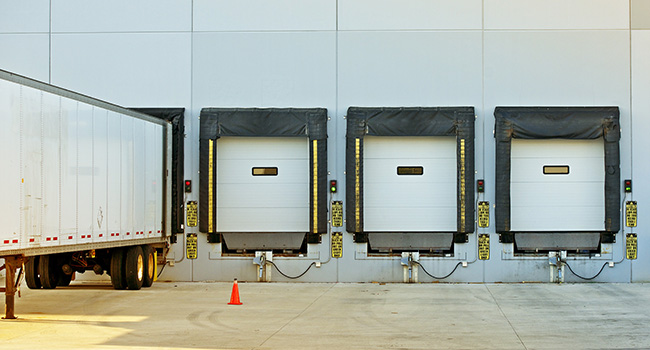
Multiple factors contribute to congestion at the loading dock, turning a seemingly simple process into a major bottleneck. A critical inbound warehouse process is essential to reducing these delays, but when it’s inefficient, problems multiply quickly. Poor communication between carriers and warehouse staff often leads to trucks arriving unexpectedly, causing chaos.
These disruptions in supply chain operations are frequently tied to internal warehouse management issues. A lack of organization, insufficient staffing during peak hours, or inadequate equipment can all slow down the loading and unloading process. Effective inventory control is also vital; if products aren’t ready and staged for an outgoing truck, or if there’s no space for an incoming shipment, delays are inevitable.
Common culprits for these delays include:
- Lack of a scheduling system: Trucks arriving on a first-come, first-served basis.
- Paperwork issues: Incorrect or missing documentation for shipments.
- Insufficient staff or equipment: Not having enough hands or tools to manage the workload.
- Poorly organized warehouse layout: Inefficient flow of goods from storage to the dock.
The Impact of Transportation Wait Time on Logistics
Extended wait times have significant negative consequences that go far beyond a single delayed truck. For drivers and carriers, it means lost productivity and revenue, as their time is spent waiting instead of driving. This often leads to detention fees, which are passed on to you, the shipper, increasing your overall transportation management costs.
These delays also strain relationships with your transportation service provider. Carriers may become reluctant to work with facilities known for long waits, potentially limiting your shipping options or forcing you to pay higher rates. A third-party logistics provider operates by managing these logistics activities for you, and they can help mitigate these risks by optimizing schedules and improving communication.
Ultimately, these hold-ups disrupt the entire supply chain. A delay at your warehouse can cause a domino effect, impacting delivery schedules, customer satisfaction, and your ability to meet market demands. Efficiently managing these logistics activities is not just about saving money; it’s about maintaining a reliable and competitive operation.
Common Challenges in Warehouse Operations
Beyond truck congestion, warehouses face numerous internal challenges that hinder efficiency. One of the most significant is ineffective inventory management. Without a clear picture of what you have and where it is, tasks like order processing and preparing shipments for fast unloading become slow and error-prone.
Another common hurdle is the lack of modern technology. Many warehouses still rely on manual processes and outdated systems, which are no match for the speed and complexity of modern logistics. This can lead to inaccurate data, poor communication, and an inability to respond quickly to changes or problems. Investing in solutions like warehouse management software is one of the most effective ways to streamline operations.
Here are some of the most frequent challenges:
- Inaccurate inventory counts: Leading to stockouts or overstocking.
- Inefficient warehouse layout: Causing unnecessary travel time for staff.
- Lack of standardized processes: Resulting in inconsistent performance.
- Poor communication: Between different departments within the warehouse.
The Role of Third Party Logistics in Reducing Waiting Time
So, what does 3PL mean in logistics? It stands for third-party logistics, where you outsource some or all of your distribution and fulfillment services to a specialized service provider. A 3PL can be a game-changer for improving warehouse management and cutting down on truck waiting times. These providers bring expertise, technology, and established processes to the table.
Well-known 3PL companies like FedEx Supply Chain, UPS Supply Chain Solutions, and DHL Supply Chain have the resources to optimize your entire logistics operation. By handing over dock scheduling and other tasks to a 3PL, you can leverage their knowledge to create a more efficient system, freeing you to focus on your core business. Let’s explore how they achieve this optimization and the types of services they offer.
How Third Party Logistics Providers Optimize Dock Scheduling
Third-party logistics providers excel at optimizing dock scheduling by implementing sophisticated systems and processes. A 3PL operates by acting as the central coordinator between your business, carriers, and the warehouse. They often use advanced transportation management systems (TMS) to create and manage dock appointments, ensuring a steady, manageable flow of traffic.
This proactive approach replaces the chaotic “first-come, first-served” model with an organized schedule. Logistics providers can analyze shipping volumes and warehouse capacity to allocate specific time slots for each truck. This allows the warehouse team to prepare for arrivals, ensuring staff and equipment are ready for immediate loading or unloading.
By leveraging their expertise and technology, 3PLs provide supply chain solutions that prevent dock congestion before it starts. They can also manage exceptions, like late arrivals, by dynamically adjusting the schedule to minimize disruption. This level of coordination is difficult to achieve without the dedicated focus and resources that a 3PL partner brings.

Types of Services 3PLs Offer for Efficient Warehouse Operations
Third-party logistics providers offer a wide array of services designed to make warehouse operations more efficient. These logistics solutions go far beyond simple storage and shipping. For ecommerce businesses, which often use 3PLs to handle their entire fulfillment process, these services are invaluable for scaling operations and meeting customer expectations.
A core offering is comprehensive order management and distribution services. This includes everything from receiving inventory from your suppliers to picking, packing, and shipping orders directly to your customers. Many 3PLs also handle product returns, also known as reverse logistics, which can be a complex process to manage in-house.
Here are some typical services offered by 3PL providers:
- Warehousing and Inventory Management: Storing products and tracking inventory levels.
- Order Fulfillment: Processing customer orders from start to finish.
- Transportation Management: Coordinating and managing shipments across various carriers.
- Reverse Logistics: Handling customer returns and exchanges efficiently.
Comparing 3PL and 4PL Solutions for Dock Management
When exploring outsourced logistics services, you’ll encounter both 3PL and 4PL models. The key difference between 3PL and 4PL lies in the scope of management. A 3PL provider executes specific logistics functions, like warehousing or transportation. You hire them to perform tasks that are part of your supply chain, allowing you to focus on your core business.
A fourth-party logistics (4PL) provider, on the other hand, takes on a broader management role. A 4PL acts as a single point of contact that oversees your entire supply chain, often managing multiple 3PLs and other service providers on your behalf. They focus on high-level strategy and optimization for the entire supply chain, not just the physical execution of tasks.
For dock management, a 3PL would directly manage scheduling and operations. A 4PL would oversee the entire process, potentially selecting and managing the 3PL that handles the dock, ensuring it aligns with the overall supply chain strategy.
Feature | 3PL (Third-Party Logistics) | 4PL (Fourth-Party Logistics) |
Role | Manages and executes specific logistics functions (e.g., warehousing, shipping). | Manages the entire supply chain, acting as a strategic partner. |
Scope | Tactical and operational focus on outsourced tasks. | Strategic focus on overall supply chain optimization and integration. |
Assets | Often asset-based (owns warehouses, trucks) or non-asset-based. | Almost always non-asset-based; manages resources of other providers. |
Relationship | A vendor providing a specific service. | A strategic partner and a single point of contact for all logistics. |
Key Elements of the Warehouse Inbound Process
The inbound process is the foundation of efficient warehouse management. This is where goods are received, inspected, and put away into storage. A poorly managed receiving process can lead to inaccurate inventory levels, misplaced products, and significant delays in order fulfillment.
A 3PL can manage key warehousing processes like both inbound and outbound logistics. Inbound logistics involves everything coming into the warehouse, while outbound logistics covers everything going out. A streamlined inbound process ensures that products are available and correctly located, which makes the outbound process much faster. We will now examine the steps of the inbound process and why it’s so important.
Steps in the Warehouse Inbound Process
A well-defined inbound process is critical to reducing delays because it creates a predictable and efficient workflow. The process begins long before a truck arrives at the receiving dock, starting with effective inbound scheduling. This ensures that the warehouse is prepared for the incoming shipment, with space and staff allocated.
Once a truck arrives, the receiving team unloads the goods and verifies them against the shipping documents. This step is crucial for accuracy, as it confirms that the correct items and quantities have been delivered. Any discrepancies are noted and communicated immediately to prevent future inventory problems and streamline all related supply chain activities.
After verification, the goods are put away in their designated storage locations. An organized system for put-away ensures that products can be located quickly for order fulfillment. The key steps are:
- Inbound Scheduling: Coordinating arrival times with carriers.
- Receiving and Unloading: Safely taking goods off the truck at the receiving dock.
- Verification: Checking the shipment for accuracy against the purchase order.
- Put-Away: Storing items in their correct inventory locations.
Importance of Accurate Inbound Scheduling
Accurate inbound scheduling is one of the most effective ways to reduce delays and boost operational efficiency. When you know exactly when shipments are arriving, you can plan your resources accordingly. This means having the right number of staff and the necessary equipment ready at the dock, eliminating the idle time that occurs when a truck shows up unexpectedly.
This level of planning has a direct impact on inventory management. With a predictable flow of incoming goods, you can better manage your storage space and avoid clutter at the receiving area, which is a common source of bottlenecks. It also allows for a smoother transition of products from receiving to their final storage locations.
Furthermore, accurate scheduling is a prerequisite for warehouse automation. Automated systems rely on predictable, scheduled events to function effectively. By creating a structured inbound flow, you lay the groundwork for implementing advanced technologies that can further accelerate your processes and reduce manual effort, making the entire warehouse operation more efficient.
Tools Used to Streamline Inbound Deliveries
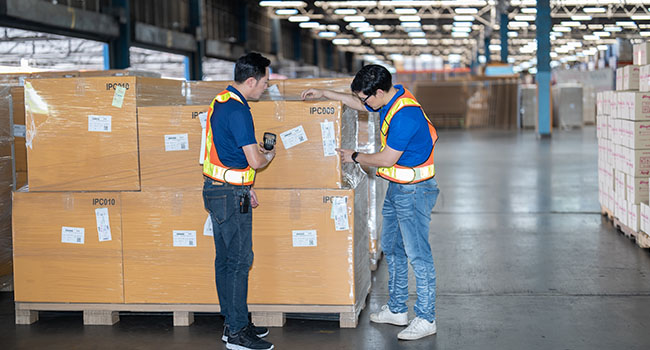
To effectively manage inbound deliveries, modern warehouses rely on a variety of software systems and advanced technology. The cornerstone of this is a robust warehouse management software (WMS). A WMS provides a centralized platform for managing everything from dock scheduling to inventory put-away, offering real-time visibility and control.
In addition to a WMS, many companies use appointment scheduling software specifically for their docks. These systems allow carriers to book their own arrival times online, which reduces administrative work for your team and gives carriers more flexibility. This technology is often offered by top 3PL providers in the US, which you can find through industry directories and online searches.
Integrating these tools with tracking systems provides even greater efficiency. Real-time GPS tracking of inbound trucks allows you to see their exact location and estimated time of arrival, helping you adjust your plans on the fly. Key tools include:
- Warehouse Management Software (WMS): For overall process control.
- Dock Appointment Scheduling Systems: To manage truck arrivals.
- Real-time GPS Tracking Systems: For visibility into truck locations.
- Barcode Scanners and RFID: For fast and accurate product identification.
Essential Resources for Efficient Dock Management
Efficient dock management requires more than just a schedule; it depends on having the right resources in place. This includes everything from the physical loading dock and warehouse space to the technology and people who run it. Without adequate resources, even the best plans can fall apart.
A 3PL can provide many of these key warehousing processes and resources, including transportation services and optimized warehouse storage solutions. However, whether you work with a partner or manage it yourself, you need the right tools, equipment, and trained staff to keep things moving smoothly. Let’s look at the specific resources that are essential for an efficient loading dock.
Technology Solutions for Reducing Truck Waiting Time
Technology is a powerful ally in the fight against truck waiting times. Warehouse automation and software solutions can transform a congested dock into a model of efficiency. A warehouse management software (WMS) is one of the most effective solutions, as it provides a central hub for coordinating all dock activities, from scheduling appointments to tracking labor productivity.
Implementing tracking systems with real-time monitoring capabilities gives you unprecedented visibility. You can see when trucks are approaching, how long they’ve been at the dock, and how quickly they are being processed. This data allows you to identify bottlenecks as they happen and make immediate adjustments.
This information also helps you measure performance and find areas for improvement. By analyzing wait times and turnaround speeds, you can set benchmarks and work toward continuous improvement. Some of the most effective warehouse operations solutions for fast unloading include:
- Dock Scheduling Software: To manage and space out truck arrivals.
- Yard Management Systems (YMS): To organize trucks waiting in the yard.
- Real-time Monitoring Dashboards: To visualize dock activity and performance.
- Automated Communication Tools: To send alerts to staff and drivers.
Equipment Needed for Fast Loading and Unloading
Having the right warehouse equipment is fundamental for fast loading and unloading operations. The speed at which you can move goods on and off a truck at the receiving dock directly impacts waiting times. Relying on outdated or insufficient equipment is a common cause of delays.
For most warehouses, essential equipment includes forklifts, pallet jacks, and conveyor belts. The type and number of these items should match the volume and type of freight you handle. For example, a facility that moves heavy pallets will need powerful forklifts, while one handling many small boxes might benefit more from an efficient conveyor system.
Investing in modern and well-maintained warehouse equipment is one of the most effective solutions for improving warehouse management. It not only speeds up logistics functions but also enhances safety for your staff. Ensuring your team has the tools they need to perform their jobs efficiently is a direct investment in reducing truck wait times.
Staff Training and Standard Operating Procedures
Technology and equipment are only part of the equation; a well-trained staff is just as critical for operational efficiency. Proper staff training ensures that every team member understands their role and how to perform it safely and effectively. This includes training on everything from using equipment to following the correct procedures for order picking and loading.
Developing and implementing Standard Operating Procedures (SOPs) is one of the most effective warehouse operations solutions. SOPs create consistency in your processes, ensuring that tasks are performed the same way every time, regardless of who is on shift. This reduces errors, improves predictability, and makes it easier to train new employees.
When staff are confident in their roles and understand the importance of speed and accuracy, the entire operation runs more smoothly. This translates to faster turnaround times at the dock and better customer service, as shipments get on their way without unnecessary delays. Continuous training and reinforcement of SOPs are key to maintaining high performance.

Beginner’s Guide to Reducing Truck Waiting Time
Ready to take the first steps toward reducing truck waiting times? Getting started can feel overwhelming, but breaking it down into manageable actions makes it much easier. This beginner’s guide is designed to help you build a foundation for more efficient warehouse operations and transportation management.
Whether you’re an ecommerce business looking for better supply chain solutions or a larger company wanting to improve your order management, the principles are the same. One of the main benefits of using a 3PL is that they handle this for you, but you can achieve significant improvements on your own. Let’s look at what you’ll need to get started and how to set up a basic system.
What You’ll Need to Get Started
Before you can overhaul your logistics processes, you need to have a clear understanding of your current situation. The first step is to gather data. You need to know how long trucks are currently waiting, when your peak traffic hours are, and what the most common causes of delays are.
You also need to assess your physical resources. Do you have enough warehouse space at the receiving and shipping docks to stage inbound and outbound loads? Is your equipment in good working order and sufficient for your needs? A clear-eyed evaluation of your assets is essential for effective supply chain management. Ecommerce businesses often use 3PL solutions because a 3PL already has these resources optimized for various market conditions.
To begin, make sure you have:
- Data on current wait times: A baseline to measure improvement against.
- An assessment of your warehouse space and layout: Identify physical constraints.
- An inventory of your equipment: Know what tools you have and what you might need.
- Buy-in from your team: Get your staff involved from the start.
Setting Up a Dock Appointment System
One of the most impactful changes you can make is to implement a dock appointment system. This moves you from a reactive, chaotic environment to a proactive, organized one. Instead of trucks showing up whenever they want, they will arrive at a pre-scheduled time.
You don’t necessarily need complex software systems to get started. A simple shared calendar or spreadsheet can work for smaller operations. The key is to create a system for appointment scheduling and communicate it clearly to all your carriers. As you grow, you can invest in more sophisticated logistics solutions or transportation management systems.
This process is a core part of the key warehousing processes managed by 3PLs, but it’s entirely achievable on your own. By controlling the flow of traffic into your facility, you can better manage your labor, equipment, and space, leading to a dramatic reduction in wait times.
Coordinating Between Drivers, Warehouse Staff, and 3PLs
Effective communication is the glue that holds your dock operations together. A third-party logistics provider often operates as a central communication hub, but if you’re managing this yourself, you need to establish clear channels between all parties involved. This includes truck drivers, your warehouse staff, and any logistics providers you work with.
Drivers need to know who to contact if they are running late and what the procedures are upon arrival. Your warehouse staff needs real-time updates on the schedule so they can prepare for each truck. Creating a single point of contact or a clear communication protocol can prevent confusion and misunderstandings.
Ultimately, these supply chain solutions are about improving the customer experience for your carriers. When drivers feel respected and can get in and out of your facility quickly, it builds goodwill and makes your facility a preferred stop. This coordination is a key part of effective transportation management.
Step-by-Step Guide to Minimizing Truck Delays
Now that you understand the basics, let’s walk through a step-by-step process for minimizing truck delays. Following these steps will help you systematically improve your logistics operations and boost operational efficiency. This structured approach allows you to measure your progress using key performance indicators (KPIs).
This guide provides a roadmap for improving your supply chain management, whether you handle inbound and outbound logistics yourself or use a 3PL. One of the main benefits of using a 3PL is their expertise in executing these steps, but you can achieve great results by following this process diligently.

Step 1: Analyze Current Warehouse Operations and Identify Bottlenecks
The first step is to conduct a thorough analysis of your current warehouse management practices. You can’t fix a problem if you don’t fully understand it. Start by mapping out your logistics activities from the moment a truck enters your yard to the moment it leaves.
Observe the process in action. Where do delays happen most often? Is it during check-in, waiting for a dock, or during the loading/unloading process itself? Talk to your warehouse staff and drivers to get their perspectives on the biggest bottlenecks. Their firsthand experience is an invaluable source of information. This is a service that highlights one of the main benefits of using a 3PL, as they bring an expert, outside perspective to this analysis.
Look for common issues such as:
- Congestion in the yard or at the dock doors.
- Delays in finding products in warehouse storage for order picking.
- Waiting for paperwork to be completed.
- Staff being pulled away to handle other tasks.
Step 2: Implement a Slot Booking or Appointment Scheduling System
Once you’ve identified your bottlenecks, the next logical step is to control the flow of traffic. Implementing a slot booking or appointment scheduling system is a foundational element of a well-run distribution center. This is one of the key benefits of using a 3PL, as they typically have these systems already in place.
As mentioned earlier, you can start simply with a shared calendar or spreadsheet. The goal is to give each truck a specific arrival window. This allows you to spread out arrivals throughout the day, preventing the morning or afternoon rush that causes so much congestion. It transforms your dock from a chaotic free-for-all into a managed process.
As your operation grows, you can graduate to more advanced software systems. Many transportation management systems include robust appointment scheduling modules that integrate with your other logistics functions. This creates a seamless flow of information that is critical for efficient order fulfillment.
Step 3: Enhance Communication with Transportation Providers
A scheduling system is only effective if everyone uses and respects it. This requires clear and consistent communication with your transportation providers. A key part of how a third-party logistics provider operates is by managing these relationships, but you can do it too. Make sure every carrier and freight brokerage you work with understands your new scheduling process.
Provide them with clear instructions on how to book appointments and who to contact with questions or issues. It’s also important to establish protocols for handling late or early arrivals. Flexibility is key, but having clear rules prevents exceptions from derailing your entire schedule.
Proactive communication can also improve customer satisfaction among your carriers. Sending automated reminders for appointments or providing real-time updates if there’s a delay at your facility shows that you value their time. A good relationship with your service provider is essential for smooth logistics operations.
Step 4: Use Tracking and Real-Time Monitoring Tools
To truly optimize your dock, you need visibility. Using advanced technology for tracking and real-time monitoring gives you the data-driven insights necessary to manage your operations effectively. This technology is one of the most effective warehouse operations solutions for fast unloading.
Real-time monitoring tools, often integrated with warehouse management software, can display the status of every dock door on a single dashboard. You can see which trucks are currently being serviced, how long they’ve been there, and which docks are free. This allows your supervisors to make smart, on-the-spot decisions to improve operational efficiency.
This technology also provides valuable historical data. You can analyze trends, measure performance against your goals, and identify recurring problems that need to be addressed at a systemic level. Some key tools to consider are:
- GPS tracking for inbound trucks.
- Yard management systems to track trailers on-site.
- Dock management software with real-time dashboards.
- Sensors that detect when a truck arrives at and departs a dock.
Step 5: Train Staff on Efficient Warehouse Loading Dock Practices
Your dock staff are on the front lines of your warehouse management efforts. Proper staff training is one of the most effective and fundamental warehouse operations solutions you can implement. Every team member needs to be trained on the new procedures, including the appointment system and any new technology you’ve introduced.
Training should cover more than just the basics. Teach them best practices for safe and efficient loading and unloading, such as how to stage freight before a truck arrives to speed up the order picking and loading process. Emphasize the importance of their role in reducing wait times and improving customer service for drivers.
Empower your staff to identify and suggest improvements. They often have the best insights into what is and isn’t working on the dock. When your team is well-trained, engaged, and equipped with the right tools, they become your greatest asset in creating an efficient loading dock environment.
Step 6: Continuously Review and Optimize the Process
Reducing truck wait times is not a one-time project; it’s an ongoing process of improvement. Once you have your new systems in place, you must continuously review and optimize them to maintain operational efficiency. This is another area where the main benefits of using a 3PL shine, as they are experts in continuous improvement.
Regularly review your key performance indicators (KPIs). Are you meeting your goals for truck turnaround time? Have detention fees decreased? Use this data to identify what’s working well and where further adjustments are needed. This data-driven approach is essential for long-term success in all your logistics activities.
Hold regular meetings with your team to discuss performance and gather feedback. The logistics landscape is always changing, so your processes must be flexible enough to adapt. Continuously look for opportunities to refine your approach by:
- Tracking KPIs like average wait time and turnaround time.
- Conducting regular reviews of your dock schedule and capacity.
- Seeking feedback from drivers and carriers.
- Exploring new technologies to further improve inventory management and efficiency.
Best Practices for Dock Management and Throughput
Achieving best-in-class dock management is about maximizing throughput—the rate at which trucks are processed through your facility. This requires a holistic approach that combines smart scheduling, efficient use of warehouse space, and data-driven performance tracking for your supply chain operations.
Many of these practices are core to how 3PLs deliver operational efficiency, highlighting the benefits of using a 3PL. By implementing these strategies, you can turn your loading dock into a competitive advantage. The most effective warehouse operations solutions focus on speed, organization, and measurement. Let’s explore some top strategies.

Strategies to Increase Dock Turnaround Speed
Increasing dock turnaround speed is a primary goal of effective warehouse management. One of the most effective strategies is to prepare for trucks before they arrive. This means staging outbound shipments near the correct dock door and clearing space for inbound goods. This simple step can shave significant time off the loading and unloading process.
Another powerful tactic is to implement a “drop and hook” program where possible. Instead of drivers waiting for their trailer to be loaded or unloaded, they can drop a full trailer, hook up to an empty one, and leave immediately. This dramatically reduces driver time on-site and is a hallmark of efficient logistics operations.
These solutions are designed to make the order fulfillment process as smooth as possible, which ultimately boosts customer satisfaction. Other key strategies include:
- Pre-loading trailers for outbound shipments.
- Using a team approach to unload trucks faster.
- Having dedicated staff for check-in and paperwork processing.
- Cross-docking goods directly from an inbound to an outbound truck.
Space Utilization at the Warehouse Loading Dock
How you use your warehouse space at the loading dock has a massive impact on efficiency. A cluttered, disorganized dock is a slow dock. One of the most effective solutions is to create clearly defined areas for different activities: inbound staging, outbound staging, and a clear path for equipment and personnel.
Effective inventory control is essential for managing this space. You should avoid using the dock area for long-term storage space. Goods should flow through the dock area, not stop there. By keeping the dock clear, you ensure that there is always room to load and unload trucks without obstruction.
This disciplined approach to space utilization is critical for smooth order fulfillment. It ensures that your team can move quickly and safely, without having to navigate around piles of pallets or other obstacles. A clean and organized dock is the foundation of a fast and efficient warehouse operation.
Implementing Metrics to Track Transportation Wait Time
You can’t improve what you don’t measure. Implementing key performance indicators (KPIs) to track transportation wait time is essential for understanding your performance and driving improvement. This is a core benefit of using a 3PL, as they are experts in data tracking, but you can easily do it yourself.
Start by defining the metrics that matter most to your operation. The most basic and important KPI is the average truck turnaround time, measured from the moment a truck checks in to the moment it checks out. This gives you a clear, high-level view of your dock’s efficiency.
Use your warehouse management software or a simple spreadsheet to log this data for every truck. Over time, you’ll build a rich dataset that can reveal trends and highlight opportunities for improvement throughout your transportation management and supply chain processes. Key metrics to track include:
- Average Wait Time: Time from check-in to being assigned a dock.
- Average Service Time: Time spent at the dock being loaded/unloaded.
- Total Turnaround Time: The sum of wait and service time.
- Detention Fees Paid: The direct cost of your delays.
Conclusion
In conclusion, reducing truck waiting time at warehouse docks hinges on understanding the intricacies of logistics operations and implementing effective strategies. By addressing the common causes of delays and leveraging technology, you can enhance efficiency and streamline your loading processes. The coordination between drivers, warehouse staff, and third-party logistics providers plays a crucial role in this endeavor. Moreover, by continuously analyzing and optimizing your operations, you can create a more productive and efficient environment. If you’re ready to take your warehouse operations to the next level, get a free consultation today and discover tailored solutions to minimize delays and improve overall throughput.
Frequently Asked Questions
How does a third party logistics provider help reduce truck waiting time?
A 3PL provider reduces truck waiting time by implementing advanced scheduling systems, optimizing warehouse management, and improving communication between all parties in the supply chain. Their expertise in transportation management and logistics services leads to greater operational efficiency and smoother operations at the dock.
What are the most effective warehouse operations solutions for fast unloading?
The most effective solutions include implementing warehouse management software for scheduling, using proper equipment like forklifts and conveyors, and training staff on efficient practices. Warehouse automation and clear processes for all logistics functions are key to speeding up unloading, which in turn improves order fulfillment and customer service.
Why is the warehouse inbound process critical to reducing delays?
The inbound receiving process is critical because it sets the stage for all other warehouse management activities. A smooth, organized process ensures accurate inventory levels and that products are put away correctly. This prevents downstream delays in order processing and other logistics operations by making items easy to find when needed.

Haley serves as the Marketing Manager for Complete Quality Solutions. She joined CQS in 2023 with her prior experience gained with GXO and XPO Logistics.