Business Development
(224) 213-5119
General Information
(513) 776-1078

- By Haley
- October 1, 2026
Table of Contents
Key Highlights
- Furniture distribution depends on strong supply chain management and reliable logistics services for storage, transport, and setup.
- A 3PL helps furniture brands handle warehousing, delivery, and assembly through one service provider.
- Large-item logistics needs careful warehouse management, trained labor, and clear delivery planning.
- Flexible labor solutions help logistics providers respond to demand swings without hurting customer satisfaction.
- Technology supports scheduling, tracking, and inventory accuracy across operations.
- The right partner improves speed, control, and service quality.
Introduction
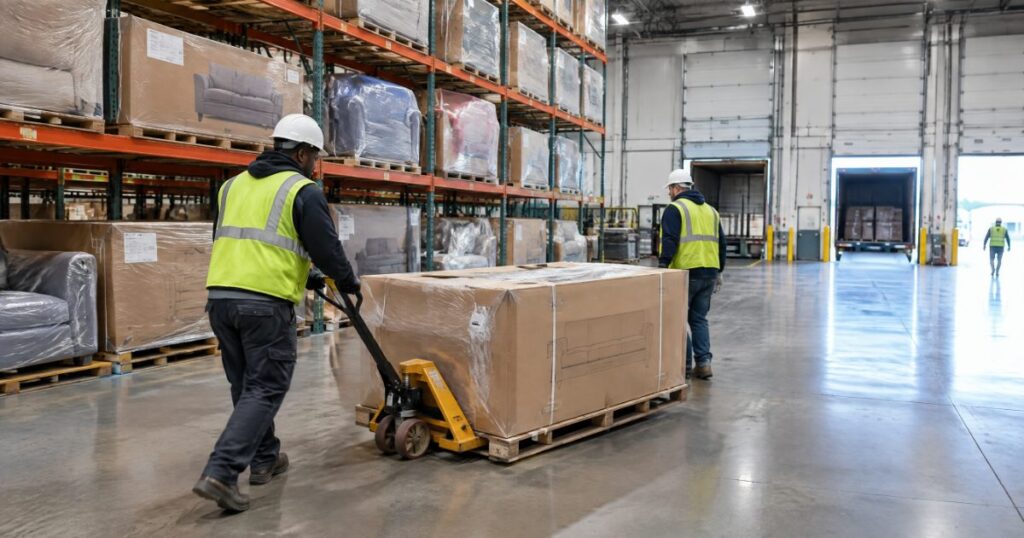
Moving furniture is not like shipping small boxes. Each item takes more space, needs careful handling, and often requires setup at the final stop. That is why furniture distribution calls for smart logistics management and dependable customer service. If your business sells beds, desks, sofas, or other large items, you need support that covers storage, transport, and assembly. A strong partner for warehouse labor solutions and logistics can help you reduce friction and keep deliveries on track.
Understanding Furniture Distribution & Assembly in Logistics
Furniture distribution includes more than moving products from one place to another. It connects receiving, storage, order handling, loading, delivery, and final setup. In supply chain management, each step has to work together so large items arrive safely and on time.
Assembly adds another layer to supply chain operations. Teams may need to inspect parts, prepare hardware, and complete setup before or after delivery. Because of that, furniture companies often rely on logistics services that combine warehouse work, transport, and labor support.
The Role of Large Item Logistics in the Furniture Industry
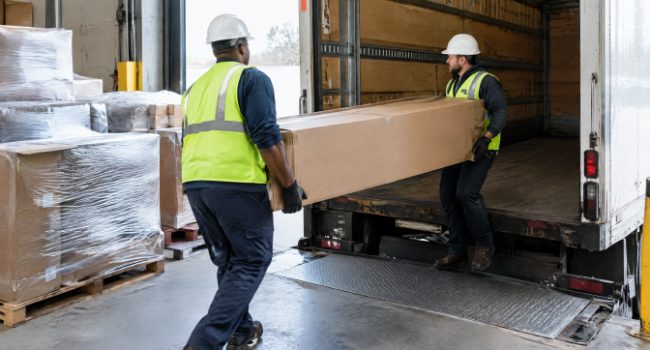
Large item logistics is central to the furniture industry because size, weight, and packaging shape every shipping decision. A sofa, dining table, or wardrobe needs more planning than a standard parcel. Storage slots, loading methods, route planning, and delivery timing all affect results.
In outbound logistics, furniture businesses must coordinate warehouse release, carrier scheduling, and final-mile handoff. Some companies use freight forwarders and distribution services to move products across regions while keeping delivery windows manageable. This structure helps reduce damage and improves control over customer-facing shipments.
So, what does 3PL mean in logistics? It means third-party logistics, a long-term outsourcing model where a provider manages functions like warehousing, transportation, inventory, and order fulfillment. For furniture businesses, that support can be the difference between delayed delivery and a smooth customer experience.
Challenges of Moving and Assembling Big Furniture Pieces
Big furniture creates pressure at every stage of warehouse operations. Items are bulky, often heavy, and can be damaged if handled the wrong way. Assembly adds another task, especially when products arrive flat-packed or with multiple components that must stay together.
On the transportation services side, loading and route planning are not simple. A missed part, poor packaging, or bad handoff can turn one order into a return, a delay, and an unhappy customer. That is why many companies use management software to track inventory, labor, and shipment status in one flow.
Common challenges include:
- Limited space for oversized items in storage and staging
- Higher risk of product damage during moves and setup
- Scheduling skilled teams for assembly at the right time
- Keeping parts, instructions, and hardware matched to each order
A 3PL provider helps businesses with supply chain management by organizing these moving parts through integrated handling, storage, transport, and labor coordination.
Supply Chain Dynamics for Furniture Distribution
Furniture supply chain logistics depends on timing, visibility, and coordination. Inventory has to be available when orders come in, yet oversized goods also take up valuable room. That means businesses need careful planning around stock, storage, and order flow.
Across logistics operations, a small delay can create larger problems. If inbound goods are late, outbound delivery schedules shift. If assembly labor is unavailable, completed orders can sit in staging. These gaps increase handling time and reduce space efficiency, which then affects cost control.
The main services offered by third-party logistics companies include warehousing, inventory management, order fulfillment, and transportation. Some also provide value-added support like packaging, tracking, and light assembly. In furniture distribution, these services help connect storage, movement, and setup into one operating model.
What Is Third-Party Logistics (3PL) in Furniture Distribution?
Third-party logistics is the outsourcing of logistics work to an outside company that manages part or all of your distribution process. In furniture distribution, that can include receiving inventory, storing goods, preparing orders, and arranging shipment.
A 3PL service provider may also support assembly, packaging, returns, and customer-facing delivery coordination. These logistics services are useful when your business wants to improve consistency, expand reach, or avoid building every logistics function in-house. The next sections explain why 3PL matters and how it differs from other models.
Definition of 3PL and Its Importance
A 3PL is a company that manages operational logistics activities for another business. Its role often includes warehousing, transportation, inventory handling, and fulfillment. In furniture, this support can stretch from storage to delivery scheduling and product setup.
The importance of 3PL comes down to better logistics management. Instead of building your own warehouse network, fleet, and labor pool, you can use an external partner with existing systems and experience. That can lower capital needs and let your team stay focused on selling, planning, and product work.
3PL providers are important because they offer practical supply chain solutions that can scale and adapt to customer needs. A 4PL, by contrast, usually acts at a higher planning and integration level and may not own assets. For many furniture businesses, a 3PL is the direct operating partner that supports customer satisfaction day to day.
Key Differences Between 3PL and 4PL
A 3PL handles hands-on logistics functions such as storage, transport, and fulfillment. It is usually integrated into a customer’s daily logistics operations and may provide customized services under a long-term contract. This model works well when a furniture company needs an operator, not just a planner.
A 4PL takes a broader coordination role. It usually focuses on selecting providers, integrating systems, and improving total supply chain performance. A 4PL may not own transport assets or warehouse capacity. Instead, it manages the network and often relies heavily on management software and oversight.
Feature | 3PL | 4PL |
| Primary role | Executes logistics work such as warehousing, shipping, and fulfillment | Oversees and integrates multiple logistics partners |
| Focus | Day-to-day operations | End-to-end planning and coordination |
| Asset ownership | May own warehouses or fleets, or operate in hybrid form | Usually non-asset based |
| Customer relationship | Operational service partner | Strategic supply chain integrator |
| Typical use | Businesses needing direct execution support | Businesses needing network-wide optimization |
For a closer look at both models, see our guide to the key differences between 3PL and 4PL.
Examples of 3PL Providers Supporting U.S. Furniture Businesses
In the United States, well-known 3PL providers include large logistics companies that manage warehousing, freight, and fulfillment at scale. For furniture businesses, the right fit depends on storage needs, transport reach, assembly requirements, and system integration.
Some providers are asset-based, some are non-asset-based, and others follow a hybrid model. That matters because logistics solutions can vary in flexibility, infrastructure, and service depth. Furniture sellers often look for partners that can support bulky goods, complex handling, and reliable final-mile delivery.
Examples often mentioned in the United States include:
- UPS Supply Chain Solutions
- FedEx Logistics
- DHL Supply Chain
- Freight forwarders and regional fulfillment services with furniture experience
The best choice is not always the biggest name. It is the provider that fits your product profile, service expectations, and growth plans.
Core Services Offered by 3PL in Furniture Logistics
A furniture-focused 3PL usually offers a mix of storage, transportation, inventory control, fulfillment, and value-added support. These logistics solutions help businesses manage bulky products without building every function themselves.
That matters when your core business is selling furniture, not running warehouses or carrier networks. Strong fulfillment solutions can also improve order accuracy, delivery speed, and setup quality. The next sections break down the core services that matter most for large-item logistics.
Inventory Management Solutions
Inventory management is one of the main services offered by third-party logistics companies. In furniture logistics, it is especially important because oversized goods can tie up space and capital quickly. A 3PL helps track what is on hand, where it is stored, and when it needs to move.
Many providers use warehouse management tools to improve visibility and accuracy. That gives you better control over stock levels, receiving activity, and order release. It also reduces the risk of misplaced components, duplicate handling, and storage congestion.
For furniture businesses, good inventory management supports smoother fulfillment and fewer surprises. When the right item, hardware, and packaging are available at the right time, delivery runs more smoothly. That means fewer delays, stronger planning, and better use of warehouse capacity.
Transportation and Delivery Services
Transportation services are a core part of furniture logistics because large items require careful routing, loading, and delivery timing. A 3PL connects shipments to carrier networks and helps businesses choose methods that match order size, distance, and service level.
This support helps with supply chain management by reducing coordination gaps between warehouse release and final delivery. Experienced logistics providers can use their network of carriers and shipping knowledge to improve planning and manage exceptions. They may also support freight forwarding, full truckload, or less-than-truckload moves depending on volume.
Another benefit is better control over shipping costs. Because 3PLs work across many customers, they often use scale to improve transportation efficiency. For furniture sellers, that can mean more predictable delivery performance and less strain on internal teams.
Warehousing and Storage Options
Warehousing is more than putting furniture on shelves. Large items need room for safe storage, staging, inspection, and movement. A 3PL can offer warehouse capacity that adjusts more easily than a fixed internal setup.
A company should consider using a 3PL for warehousing and fulfillment when its own warehouse is too limited, too costly, or too hard to scale. This is especially useful when demand changes by season, product line, or market growth. Instead of overbuying space, businesses can use external capacity as needed.
Strong warehouse operations also improve speed and control. With the right layout, tracking, and handling processes, furniture moves through receiving, storage, and outbound release with fewer delays. That supports better inventory flow and makes fulfillment more dependable.
Furniture Assembly Support
Assembly support adds value when furniture is shipped in parts or needs prep before delivery. Some 3PLs provide light assembly, kitting, inspection, and final packaging within the fulfillment center. That saves time later in the delivery process and can reduce service failures.
For e-commerce businesses, this support helps improve customer satisfaction. Orders can be checked, matched with hardware, and prepared in a more controlled setting. When a warehouse management system tracks each step, it becomes easier to spot missing components before an order leaves the building.
Assembly support may include:
- Part matching and hardware verification
- Light pre-assembly before shipment
- Repackaging after inspection
- Staging finished items for delivery
These value-added services are useful when buyers expect a faster, cleaner, and more complete delivery experience.
Furniture Assembly Support: Labor Solutions Explained
Furniture assembly depends on people as much as process. Even with solid systems, you still need trained warehouse labor to inspect parts, follow instructions, handle tools, and move finished items safely. That is why labor planning matters so much in furniture logistics.
Good warehouse management connects staffing to order volume, delivery schedules, and service expectations. When labor is aligned with demand, customer service improves because orders move faster and errors drop. The next sections explain what assembly work includes and how providers support it.
What Does Furniture Assembly Involve?
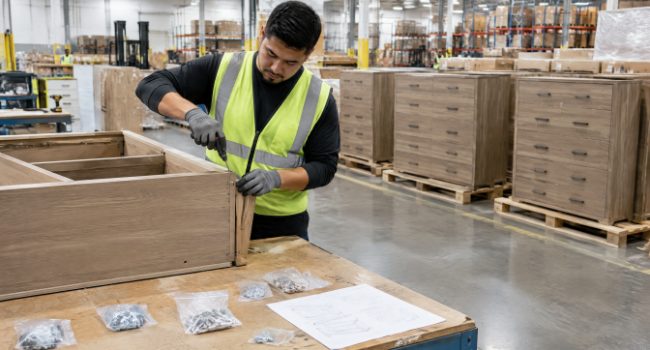
Furniture assembly involves more than using tools and tightening fasteners. In warehouse operations, the process often starts with checking the product, confirming parts, reviewing instructions, and matching each unit to the right order. That makes assembly part of order processing, not a separate afterthought.
Next comes the physical build or prep stage. Teams may complete partial assembly, attach components, test stability, and prepare the item for transport or final delivery. For some products, this happens inside the warehouse. For others, the assembly team supports the last step closer to the customer.
3PL companies manage warehouse staffing and labor by matching labor levels to workload forecasts and service needs. When that works well, assembly becomes consistent and the customer experience improves. A missed step in assembly can create damage, returns, and delays, so staffing quality matters just as much as speed.
Professional Assembly Versus DIY Approaches
Professional assembly and DIY assembly lead to very different outcomes. If your business ships furniture that needs setup, professional support can reduce mistakes before the order reaches the customer. Many logistics providers include this service as part of broader fulfillment services.
DIY may seem cheaper at first, but it shifts labor, quality risk, and time to the buyer or an untrained team. Temporary warehouse labor can support quality furniture assembly if workers are trained, supervised, and assigned clear steps. The key issue is process control, not just employment type.
Professional assembly often offers:
- Better consistency across product types
- Fewer missing-part or incorrect-build issues
- Stronger customer satisfaction after delivery
- Faster handling for repeat assembly tasks
If you need dependable results at scale, professional assembly usually gives you more control than a do-it-yourself approach.
Value-Added Assembly Services from 3PL Providers
Many 3PL providers go beyond basic storage and shipping by adding assembly-related support. These services can include kitting, labeling, inspection, repackaging, and light product prep before delivery. For furniture businesses, that creates a smoother handoff from warehouse to customer.
A strong service provider uses standard processes and advanced technology to keep assembly tasks visible and organized. Digital tracking, inventory records, and warehouse systems help teams confirm parts, monitor progress, and reduce handling mistakes. That keeps the supply chain more stable.
These are part of the main services often offered by third-party logistics companies when they support complex products. Value-added assembly is especially useful for furniture because product quality depends on both movement and setup. If one part fails, the whole order feels incomplete.
Warehouse Labor Requirements for Large Furniture Items
Large furniture needs a different labor plan than standard carton fulfillment. Teams must handle weight, size, and awkward dimensions while protecting both the product and the people moving it. That raises the bar for warehouse management.
From a supply chain management view, labor is not just a staffing issue. It affects speed, safety, storage flow, and operational efficiency. If the wrong team is assigned, delays and damage rise quickly. The following sections explain what kinds of labor support are most useful.
The Need for Specialized Warehouse Labor
Not all warehouse labor is suited for large furniture handling. Oversized products require workers who understand safe lifting, staging, packaging care, and product-specific handling. In warehouse operations, small mistakes can lead to damage, injuries, or shipment delays.
That is why industry expertise matters. A team used to palletized cartons may struggle with sectional sofas, bed frames, or assembled tables. 3PL companies manage warehouse staffing and labor by assigning people based on workload, product type, and service requirements. This helps keep handling standards consistent.
Specialized labor is useful for:
- Safe movement of bulky or heavy products
- Accurate part matching for assembled items
- Better staging for outbound delivery windows
When labor fits the task, furniture moves faster and with fewer problems. That lowers disruption across the rest of the operation. For unloading and dock work, experienced lumper services can add trained hands without slowing the rest of the team.
Training & Safety Considerations for Handling Heavy Items
Training is a basic requirement when teams handle heavy furniture. Workers need clear methods for lifting, carrying, staging, and loading items without creating safety risks. In warehouse operations, one rushed move can cause injury, product damage, or both.
Good warehouse management supports safety by standardizing tasks and documenting steps. That may include assigning the right team size, using equipment correctly, and following product-specific handling rules. Safety is not separate from productivity. It protects labor continuity and keeps orders moving. See what a quality onboarding program for lumpers looks like in practice.
Management software can help by showing task assignments, workflow timing, and item status. 3PL companies manage warehouse staffing and labor more effectively when they can see where people are needed and where risks may build. With heavy items, strong training and visibility are essential for steady performance.
Warehouse Temp Labor vs. Permanent Staffing
The choice between warehouse temp labor and permanent staffing depends on volume, complexity, and seasonality. Permanent teams often bring consistency and product familiarity. Temp workers offer flexibility when demand jumps and extra staff is needed fast.
Temporary labor can still support quality furniture assembly if the warehouse infrastructure is organized and the work is clearly defined. Strong supervision, simple workflows, and repeatable assembly steps make it easier for temporary teams to succeed. Without that structure, quality can slip.
Key tradeoffs include:
- Permanent staff usually offer stronger product knowledge
- Temp labor helps absorb demand peaks without long-term payroll growth
- Poor labor planning can increase handling delays and the cost of shipping
The right mix often combines a stable core team with flexible support during high-volume periods. Our breakdown of in-house vs. outsourced warehouse labor costs can help you weigh the options.
Temporary Warehouse Labor Solutions
Temporary staffing can solve short-term labor gaps in furniture logistics. When orders rise quickly, warehouse temp labor helps businesses keep goods moving without overcommitting to permanent headcount.
This approach also supports warehouse capacity by adding hands during receiving surges, peak shipping periods, or assembly-heavy campaigns. If managed well, temp staffing can produce real cost savings while protecting service levels. The next sections cover where temporary labor adds value and how to manage it well.

Benefits of Using Temporary Warehouse Labor in Furniture Logistics
Temporary labor gives furniture operations room to respond when demand shifts. A promotion, seasonal spike, or large inbound shipment can create pressure fast. Instead of letting orders pile up, managers can bring in support where it is needed most.
3PL companies manage warehouse staffing and labor by adjusting headcount to forecasted volume and active workloads. When combined with management software, temporary staffing can support operational efficiency without disrupting standard workflows. That is especially helpful in fulfillment services where timing matters.
Benefits often include:
- Faster response to volume spikes
- Lower long-term labor commitment
- Better coverage for assembly or staging surges
- Improved flexibility across receiving and shipping tasks
The value is highest when temporary teams are matched to clear tasks, trained quickly, and placed inside a controlled process.
Best Practices for Hiring and Managing Temp Staff
Hiring temporary staff works best when the job is clearly defined from the start. In furniture logistics, that means specifying lifting requirements, shift timing, product types, and whether workers will support assembly, loading, or general warehouse tasks. Good warehouse management begins before the worker arrives.
Once temp staff are on site, simple training and close supervision matter. A fulfillment center should have clear task flows, labeled zones, and consistent handoff points. These steps reduce confusion and help new workers support logistics operations without slowing experienced teams.
Best practices include:
- Use short, task-specific training for each work area
- Pair new temp workers with experienced leads
- Track productivity and errors daily to adjust assignments
When you make expectations clear, temporary labor becomes easier to manage and more useful during demand peaks.
How Labor Agencies Support Furniture Distribution
Labor agencies act as an external provider that helps warehouses fill roles quickly. In furniture distribution, that can be useful when order volume changes fast or when specialized handling support is needed for a limited period. For new sites or short-term projects, travel labor services can bring in crews where local hiring is slow.
This kind of support strengthens labor management by reducing the time it takes to source workers. It also gives businesses more flexibility without expanding permanent payroll too early. For warehouses handling bulky items, agency support can be directed toward receiving, staging, packaging, or assembly prep.
3PL companies manage warehouse staffing and labor through planning, forecasting, and flexible sourcing, and agencies can be part of that model. Used well, they become one of several supply chain solutions that help keep furniture moving while internal teams stay focused on quality and throughput.
Labor Management in Third Party Logistics (3PL)
Labor management is a major part of 3PL performance. Furniture orders require the right number of people, the right skills, and the right timing. If staffing falls behind, the whole operation feels it.
That is why logistics providers rely on planning tools and process discipline. A warehouse management system can support task visibility, labor allocation, and workflow control. The next sections look at how 3PL teams manage staffing, protect quality, and use technology to track labor activity.

How 3PL Providers Manage Warehouse Staffing
3PL providers manage warehouse staffing by matching labor to expected volume, service commitments, and task complexity. Furniture operations may need different staffing plans for receiving, storage, picking, assembly, staging, and loading. The goal is to place labor where it has the biggest impact. Our step-by-step guide shows how to calculate warehouse headcount from forecasted volume.
Management software supports this process by giving managers visibility into workflow status and labor demand. If inbound shipments rise or outbound orders stack up, staffing can be adjusted before delays spread. This kind of planning helps improve operational efficiency across the building.
The strongest 3PL labor models use a mix of forecasting, standard work, and flexible labor sources. That allows providers to stay responsive without losing control. For furniture, where products are large and handling is slower, staffing decisions need to be especially deliberate.
Balancing Efficiency and Quality in Labor Solutions
Fast work is not enough if products arrive damaged or incomplete. In furniture logistics management, efficiency and quality must move together. A rushed assembly or loading process can undo every earlier step in the operation.
3PL companies balance these goals by using repeatable workflows, performance tracking, and trained supervision. Their scale can also create economies of scale in staffing and transportation, but customer satisfaction still depends on consistent execution. The process has to protect both speed and accuracy.
Helpful ways to balance labor performance include:
- Use standard work instructions for assembly and handling
- Track quality issues alongside productivity measures
- Adjust staffing before bottlenecks affect delivery promises
When labor plans focus only on output, service suffers. When they balance output with quality, the customer sees the difference.
Technology Tools for Labor Scheduling & Tracking
Technology gives labor planning more structure. With management software, 3PL teams can review workloads, assign tasks, and monitor progress in real time. That is valuable in furniture logistics, where handling times vary by product size and service level. If you are weighing a dedicated tool, read our guide on whether you need a labor management system (LMS).
API integrations and system integration also make staffing decisions more accurate. When e-commerce orders, inventory updates, and fulfillment activity feed into the same environment, managers get a clearer view of what labor will be needed and when. This helps reduce guesswork.
3PL companies manage warehouse staffing and labor more effectively when their systems talk to each other. Better visibility means faster response to changing volume, fewer missed handoffs, and tighter control over labor cost. In large-item logistics, those gains support both service and planning.
Advantages of Partnering with a 3PL for Furniture Logistics
A 3PL partnership can improve furniture logistics without forcing your company to build everything on its own. That matters if your business model depends on reliable delivery, scalable storage, and careful handling of oversized goods.
The right partner can support cost savings, smoother labor planning, and stronger fulfillment solutions across storage, transport, and setup. Just as important, outsourcing lets your team focus on sales and growth instead of daily logistics pressure. The next sections break down the main advantages.
Cost Savings for Businesses
One major reason businesses use a 3PL is cost savings. Building your own warehouse network, staffing model, and transportation process requires capital, time, and ongoing management. A provider can spread those resources across many customers.
That structure helps with cost control and can reduce overhead costs tied to facilities, equipment, systems, and labor. For e-commerce businesses, this is useful because order volumes can change quickly. Instead of carrying fixed logistics costs all year, companies can use more variable support.
Common savings areas include:
- Lower warehouse and transportation investment
- Better use of shared labor and operating systems
- Reduced risk of paying for unused space or capacity
Savings are strongest when the provider’s service model matches your order profile and delivery needs. To compare models side by side, see our 3PL vs. 4PL vs. managed labor ROI comparison.
Enhanced Customer Satisfaction
Furniture buyers care about timing, condition, and communication. If a large item shows up late, damaged, or missing hardware, the problem feels bigger than a normal parcel issue. A dependable 3PL can help reduce those failures.
That support improves customer satisfaction because the provider helps manage fulfillment, transportation, and sometimes assembly under one coordinated process. Better inventory visibility, cleaner handoffs, and more reliable scheduling all improve the customer experience from order to delivery.
Customer support also matters. When logistics runs through a structured partner, issue resolution can be more organized and transparent. For e-commerce businesses, this can protect reviews, reduce complaints, and make the brand feel more dependable. In furniture, that trust is hard to win and easy to lose.
Improved Scalability and Flexibility
Growth often creates logistics strain before it creates stable systems. A 3PL can help businesses scale into new markets without building every warehouse, workflow, and labor plan from scratch. That makes growth more practical.
Because many providers offer a wide range of fulfillment services, businesses can expand product lines or geographic reach with less internal disruption. This flexibility is useful for furniture companies that face seasonal changes, new channel demand, or sudden order spikes.
For e-commerce businesses, the benefit is clear: you get room to grow without carrying all the fixed logistics burden yourself. A flexible 3PL can support market entry, volume swings, and changing service expectations while your internal team stays focused on product and sales.
Faster Delivery and Assembly Turnaround
Speed matters in furniture, even when products are large. A 3PL can improve delivery times by placing inventory in the right locations, organizing warehouse flow, and coordinating transportation more effectively. That helps reduce unnecessary wait time between order placement and shipment.
In daily logistics operations, faster turnaround comes from better process control. Receiving, storage, picking, assembly, staging, and dispatch all need to connect. If one step slows down, order fulfillment suffers. A provider with established workflows can keep those handoffs tighter.
For e-commerce businesses, faster delivery and assembly turnaround can raise trust and reduce friction after purchase. Buyers want clear timing and fewer surprises. When a 3PL supports both movement and setup readiness, the order reaches the customer in a more complete and dependable way.
Selecting the Right 3PL or Labor Provider for Furniture Distribution
Choosing a partner for furniture logistics is not just about price. You need a service provider that can handle bulky goods, adjust labor when needed, and support consistent execution across storage, transit, and assembly.
It also helps to look at the provider’s network of carriers, warehouse setup, and reporting practices. Clear key performance indicators can show whether the partner is likely to meet your service goals. The following sections cover what to evaluate before you decide.
Factors to Consider When Choosing a 3PL
A company should look for a 3PL provider that fits its products, service expectations, and growth plans. In furniture logistics, that means checking warehousing, transportation reach, labor support, and the ability to handle oversized items without creating service issues.
Technology matters too. A strong service provider should use advanced technology for inventory visibility, order tracking, and workflow control. Cost savings are important, but fit is just as important. A lower price does not help if the provider cannot support your delivery model or customer expectations.
Focus on these factors:
- Experience with large-item handling and assembly support
- System capability for visibility and process control
- Ability to scale capacity without hurting service
The best provider is the one that supports your operation reliably, not just the one with the lowest quote.
Evaluating Experience in the Furniture Industry
Furniture has its own logistics demands, so industry expertise should carry real weight in your decision. A provider that understands bulky goods, part matching, assembly prep, and damage risk is more likely to protect service quality from start to finish.
That experience should also match your business model. A company serving retail stores may need different support than one focused on direct-to-consumer e-commerce. The same is true for different sales channels, product sizes, and delivery promises. One model does not fit every furniture operation.
When reviewing experience, ask how the provider handles similar products and order flows. You want proof that they understand the pace, handling standards, and service risks tied to furniture. Relevant experience usually leads to better planning and fewer costly surprises.
Assessing Warehouse and Assembly Capabilities
Before choosing a partner, review the physical and process side of the operation. Furniture requires enough warehouse capacity for oversized items, staging space, and safe movement paths. If the building is too tight or poorly organized, service will suffer.
You should also look at assembly readiness. Can the provider inspect parts, support light assembly, repackage goods, and stage completed products for delivery? Good warehouse operations depend on both space and process. Strong supply chain visibility makes those activities easier to monitor.
Key areas to assess include:
- Space for bulky inventory and outbound staging
- Assembly processes, tools, and trained labor access
- Visibility into inventory, order status, and workflow progress
When warehouse and assembly capabilities align with your needs, the partnership becomes much easier to scale.
Conclusion
Effective furniture distribution and assembly support are crucial for navigating the complexities of large item logistics. By partnering with a reliable third-party logistics (3PL) provider, businesses can enhance their operational efficiency, improve customer satisfaction, and ensure timely deliveries. The right labor solutions not only save costs but also offer flexibility and scalability in an evolving market. As you consider your options for logistics and assembly, remember that investing in quality services can significantly impact your overall business success. To plan labor support for your furniture operation, contact the CQS team.
Frequently Asked Questions
How does 3PL pricing work for furniture distribution and assembly?
3PL pricing usually depends on the mix of logistics services you use, such as warehousing, order handling, assembly, and transportation. For furniture, shipping costs and labor needs often shape the final rate. Good pricing models also support cost control by tying fulfillment solutions to actual volume and service requirements.
What should I look for in warehouse labor providers for large-item logistics?
Look for providers with strong warehouse management practices, experience with oversized products, and clear training methods. The best warehouse labor partners understand furniture handling, staging, and safety. In supply chain logistics, reliable labor supports smoother warehouse operations and helps logistics companies protect service quality during high-volume periods.
Can temporary warehouse labor ensure quality furniture assembly?
Yes, warehouse temp labor can support quality furniture assembly when the fulfillment center uses clear instructions, supervision, and organized workflows. Quality depends on process control and training, not just employment type. When managed well, temp staffing can improve operational efficiency while still protecting customer satisfaction.

Haley serves as the Marketing Manager for Complete Quality Solutions. She joined CQS in 2023 with her prior experience gained with GXO and XPO Logistics.