Business Development
(224) 213-5119
General Information
(513) 776-1078

- By Haley
- May 14, 2026
Table of Contents
Key Highlights
Here are the key takeaways from our discussion on full-pallet handling in 3PL efficiency:
- Full-pallet handling streamlines warehouse operations by moving entire pallets as single units, reducing touchpoints.
- This method significantly cuts down on labor costs and the need for extensive manual handling by warehouse staff.
- It boosts overall productivity by speeding up order processing and minimizing travel time within the warehouse.
- Adopting full-pallet handling leads to substantial cost savings and better space utilization.
- Implementing this strategy enhances operational efficiency, contributing to higher customer satisfaction.
Introduction
In today’s fast-paced business world, efficiency is everything. For companies relying on third-party logistics (3PL) services, optimizing every part of the supply chain is crucial. This is where full-pallet handling comes in as a transformative strategy. By moving goods in entire pallet units, you can revolutionize your warehouse management, speed up processes, and reduce costs. Are you ready to discover how this approach can be a game-changer for your logistics and boost your bottom line?
Understanding Third-Party Logistics (3PL) in the United States
Third-party logistics, or 3PL, providers have become essential partners for businesses across the United States. These companies offer outsourced logistics services, handling everything from storage to shipping. By partnering with a 3PL service provider, you can focus on your core business activities while experts manage your supply chain management needs.
The right logistics providers can offer scalable solutions that grow with your business, ensuring your products reach customers efficiently. We will explore what a 3PL is, how it works, and the different types of services available to you.
What is 3PL and How Does It Work?
So, what does 3PL mean in logistics? A 3PL, or third-party logistics provider, offers outsourced logistics services that cover various aspects of procurement and fulfillment. In simple terms, it’s any service contract that involves storing or shipping your items. A 3PL partner can manage one specific task, like transportation, or handle your entire supply chain.
Wondering how a third-party logistics provider works? Imagine you run an e-commerce business. Instead of managing your own warehouse and shipping, you hire a 3PL company. This partner handles the order fulfillment process for you. They receive your inventory, store it, and when a customer places an order, they pick, pack, and ship it directly to them.
This arrangement allows your business to leverage expert logistics services only when needed, helping you control costs effectively. You can then focus your energy on what you do best, like developing new products or marketing your brand, while the 3PL takes care of the complex logistics.
Types of 3PL Providers and Typical Services Offered
Not all 3PLs are the same; they come in different types, specializing in various aspects of supply chain management. Understanding these differences can help you choose the right partner for your logistics operations. The service options available allow you to customize a solution that fits your unique business needs.
The most common types of 3PL providers are categorized by their primary function. For example, some focus solely on transportation, while others are experts in warehousing and fulfillment services. You can even find providers that specialize in the financial and information side of logistics.
Here are some typical distribution services and solutions offered by 3PL providers:
- Transportation-based: These providers, like parcel carriers, specialize in moving goods from one location to another via air freight, trucking, or ocean freight.
- Warehouse-based: These 3PLs manage inventory storage, order processing, and fulfillment services. They receive and store your products, then ship them out as orders come in.
- Financial and information-based: These partners focus on the non-physical aspects, such as freight payment auditing, cost control, and inventory management using advanced software.
The Evolution of Warehouse Efficiency in 3PL Operations
Warehouse efficiency has come a long way, especially within 3PL operations. The journey from traditional methods to modern, technology-driven approaches has been transformative. Achieving high operational efficiency is no longer just a goal but a necessity for staying competitive. Best practices in warehouse management are constantly evolving to meet these new demands.
Optimizing inventory management and streamlining workflows are at the heart of this evolution. Let’s examine the key differences between old-school warehousing and today’s 3PL strategies, and then look at the role technology plays in this shift.
Traditional Warehousing vs. Modern 3PL Approaches
The primary difference between traditional warehousing and a modern 3PL approach lies in the scope of services and flexibility. Traditional warehousing typically involves a company leasing or owning its own warehouse space, managing all operations in-house. This gives you direct control but also means you bear all the costs and responsibilities, from staffing to technology investment.
In contrast, a modern 3PL provider offers a comprehensive, outsourced solution for your entire supply chain. They provide not just warehouse space but a full suite of services, including inventory management, order fulfillment, and shipping. This model allows for greater scalability and cost optimization, as you only pay for the services and space you use.
Here’s a simple breakdown of the differences:
Feature | Traditional Warehousing | Modern 3PL Approach |
Management | In-house by the business | Outsourced to a specialized provider |
Costs | High fixed costs (rent, staff, equipment) | Variable costs based on usage |
Scalability | Limited and difficult to adjust | Highly scalable to meet demand fluctuations |
Expertise | Relies on internal knowledge | Access to industry experts and best practices |
Technology | Requires significant capital investment | Utilizes the 3PL’s advanced technology |
Role of Technology in Optimizing 3PL Warehouse Efficiency
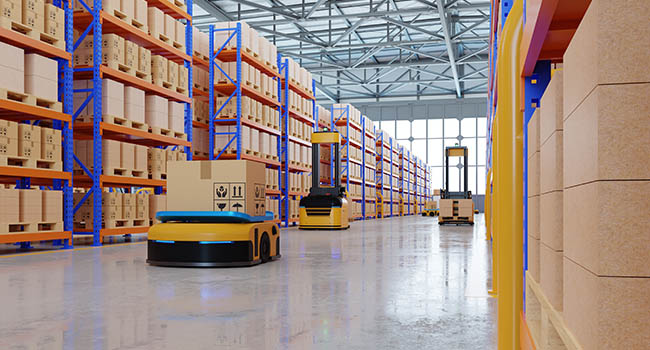
Technology is the engine driving modern 3PL warehouse efficiency. Advanced tools like warehouse management software (WMS) and sophisticated inventory management systems are no longer just nice-to-haves; they are essential. These systems automate processes, reduce human error, and provide real-time data that helps warehouse managers make smarter decisions.
Furthermore, technologies such as RFID and GPS have revolutionized tracking, offering extended supply chain visibility. This means you can see where your products are at every stage of the journey. By monitoring key performance indicators (KPIs), 3PLs can continuously refine their operations, from optimizing storage layouts to improving picking routes, ensuring everything runs as smoothly as possible.
This reliance on technology also impacts how 3PLs handle warehouse staffing. While automation and robotics can handle repetitive tasks, skilled labor is still needed to oversee these systems and manage complex situations. 3PLs invest in training their staff to work alongside technology, creating a hybrid workforce that is both efficient and adaptable to changing demands.
Introducing Full-Pallet Handling: Concept and Techniques
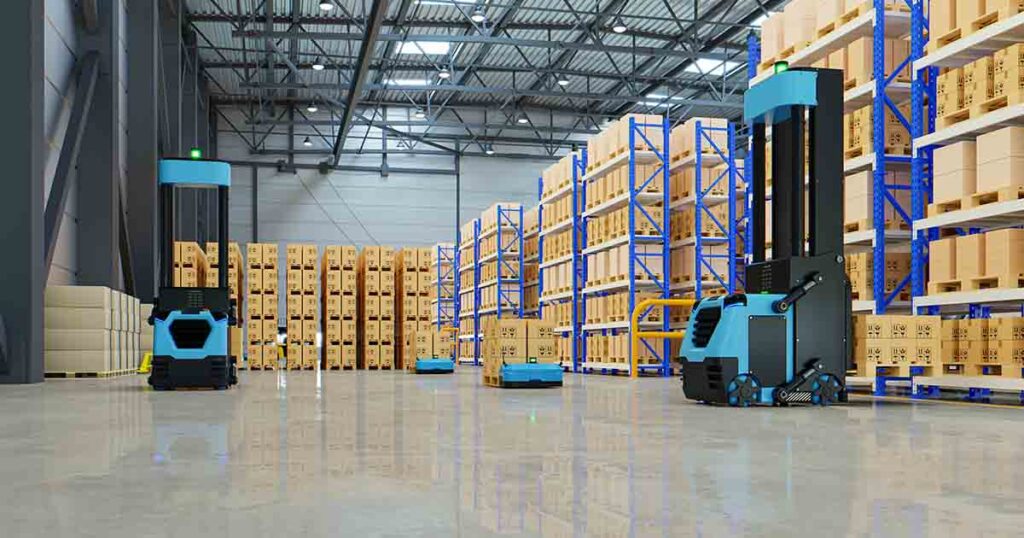
Now, let’s turn our attention to a specific strategy that is making waves in logistics operations: full-pallet handling. This method focuses on moving and storing goods as complete pallet units, rather than breaking them down into individual cases or items. It’s a simple concept with a powerful impact on efficiency.
By designing a warehouse layout that supports this approach, you can maximize space utilization and streamline the flow of goods. Let’s explore what full-pallet handling is in more detail and see how it is commonly applied in the world of third-party logistics.
What Is Full-Pallet Handling and How Does It Work?
Full-pallet handling is a warehouse strategy where goods are received, stored, and shipped as complete, unopened pallets. Instead of breaking down pallets to pick individual items for orders, the entire pallet is treated as a single stock-keeping unit (SKU). This approach is ideal for high-volume products that are typically shipped in bulk to retailers or distribution centers.
How does it work in practice? When a shipment arrives at the warehouse, the full pallets are unloaded and moved directly into designated storage racks using equipment like forklifts. The inventory management system tracks each pallet as one unit. When an order comes in for that product, an entire pallet is retrieved and loaded onto an outbound truck for delivery.
This process dramatically simplifies order processing and boosts operational efficiency. By minimizing the number of times a product is touched, you reduce labor requirements, speed up turnaround times, and lower the risk of damage. It’s a prime example of how a third-party logistics provider can streamline operations for maximum benefit.
Common Applications of Full-Pallet Handling in Third Party Logistics
Full-pallet handling is a versatile strategy used across various sectors within the 3PL industry. Its applications are particularly beneficial for businesses dealing with large quantities of uniform products. From wholesale distribution to supplying retail chains, this method streamlines the supply chain and enhances warehouse management.
One of the most common applications is in the fast-moving consumer goods (FMCG) sector, where products are moved in high volumes to meet constant demand. E-commerce businesses that deal with bulk shipments to fulfillment centers or other distribution points also benefit. For instance, a 3PL can efficiently manage large inbound shipments from a manufacturer and distribute them as full pallets to various regional hubs.
Here are some key applications:
- Bulk distribution to retailers: Moving large quantities of a single product from a manufacturer to retail store distribution centers.
- Wholesale order fulfillment: Fulfilling large orders for wholesalers who will then distribute the products to other businesses.
- Cross-docking: Unloading pallets from an inbound truck and immediately loading them onto an outbound truck with minimal storage time.
- Inventory replenishment: Efficiently moving stock between a central warehouse and smaller, regional fulfillment centers.
Core Benefits of Full-Pallet Handling for 3PL Efficiency
Adopting full-pallet handling brings a host of benefits that directly impact a 3PL’s operational efficiency. Logistics companies are constantly seeking ways to improve their processes, and this method offers a clear path to greater productivity and better cost control. The ultimate result is a more streamlined operation that enhances customer satisfaction.
By moving goods in larger, standardized units, warehouses can reduce complexity and speed up their workflows. Let’s break down how this strategy helps streamline labor and staffing, and how it directly contributes to reducing operational costs and boosting overall productivity.

Streamlining Labor and Warehouse Staffing
One of the most significant advantages of full-pallet handling is its impact on labor. By moving entire pallets at once, you drastically reduce the need for manual labor. This means fewer workers are needed to pick, pack, and sort individual items, which in turn lowers your overall labor costs. Warehouse managers can then allocate their teams to more value-added tasks.
This streamlined approach also simplifies warehouse staffing. Instead of needing a large team for intensive picking operations, a smaller, more skilled crew operating forklifts and other machinery can handle the workload. This not only cuts down on operational costs but also creates a more efficient and less physically demanding work environment for employees.
Furthermore, reducing manual handling contributes to improved warehouse safety. With fewer people moving around the warehouse floor and less lifting of heavy items, the risk of workplace accidents and injuries decreases. This creates a safer environment for everyone and reduces potential liability costs for the company.
Reducing Operational Costs and Boosting Productivity
Full-pallet handling is a powerful tool for cost optimization and boosting productivity. When you move goods by the pallet, the time it takes to process orders is significantly reduced. Less travel time for forklifts and workers within the warehouse means that more goods can be moved in less time, directly increasing overall productivity.
This efficiency translates into significant cost savings. Reduced labor needs, faster order turnaround, and fewer handling errors all contribute to a lower cost per unit moved. Additionally, by optimizing the use of warehouse space with neatly stacked pallets, you can store more inventory in the same footprint, delaying the need for costly expansions.
Ultimately, these benefits highlight why many businesses turn to 3PL companies. A 3PL provider leverages strategies like full-pallet handling to drive efficiency, which a single company might struggle to achieve on its own. The combination of expertise, technology, and optimized processes leads to a more agile and cost-effective supply chain.
Conclusion
In summary, adopting full-pallet handling can significantly transform your 3PL operations. By streamlining processes, reducing operational costs, and enhancing productivity, businesses can unlock new levels of efficiency. Embracing this approach not only benefits warehouse management but also improves overall service delivery to customers. As the logistics landscape continues to evolve, integrating innovative techniques like full-pallet handling will ensure that your 3PL operations remain competitive and responsive to market demands. If you’re ready to take your logistics efficiency to the next level, reach out to us for a free consultation and discover how we can help streamline your operations today!
Frequently Asked Questions
What Should I Look for When Choosing a 3PL Provider?
When selecting a 3PL service provider, look for industry experience, technological capabilities, and a proven track record of excellent customer service. Ensure their services align with your business processes and that they can scale with you by offering additional inventory space and resources as you grow.
How Do 3PLs Support Ecommerce Businesses Through Full-Pallet Handling?
For ecommerce, 3PLs use full-pallet handling to efficiently receive bulk inventory from suppliers. This streamlines the initial receiving and storage phase of order fulfillment. It ensures high inventory accuracy and allows for rapid replenishment of forward-picking locations, which ultimately speeds up delivery and enhances the customer experience.

Haley serves as the Marketing Manager for Complete Quality Solutions. She joined CQS in 2023 with her prior experience gained with GXO and XPO Logistics.