Complete Quality Solutions

The Power of Data-Driven Lumper Services From Dock to Delivery

Table of Contents

Key Highlights

Introduction

In the fast-paced world of logistics, getting goods from one point to another efficiently is everything. A critical, yet often overlooked, part of this process is the loading and unloading of freight. This is where a professional lumper service comes in. By providing skilled labor to handle cargo at the warehouse, these logistics services ensure your supply chain keeps moving without a hitch. This guide explores how data-driven lumping is revolutionizing the journey from dock to delivery.

Understanding Lumper Services in Modern Logistics

A lumper service provides specialized, on-demand labor to load and unload freight from trucks at warehouses and distribution centers. These skilled workers are essential for keeping the supply chain moving smoothly. Instead of a truck driver spending valuable time handling cargo, professional lumpers step in to complete the unloading process quickly and safely.

This approach is crucial for modern warehouse operations across North America, especially in high-volume warehouse facilities. By taking over this physically demanding task, lumper services help reduce driver downtime, prevent bottlenecks at the loading dock, and allow your permanent warehouse workers to focus on their core responsibilities.

Understanding Lumper Services in Modern Logistics

What Are Lumping Services and Why Are They Important?

So, what exactly are lumping services in the logistics industry? Think of them as specialized teams hired to handle the manual labor of loading and unloading trucks at a warehouse or distribution center. A lumper service provider sends skilled workers to manage cargo, ensuring the unloading process is done efficiently and correctly.

Their importance in the supply chain cannot be overstated. When a truck arrives, lumpers take charge of moving the goods, whether on pallets or as loose items, into the facility. This frees up the truck driver to rest or move on to their next destination, and allows your in-house warehouse workers to continue with tasks like order picking and packing.

Ultimately, this specialization speeds up warehouse operations, reduces the risk of product damage during handling, and keeps your entire supply chain on schedule. Faster turnarounds at the dock mean quicker fulfillment and higher customer satisfaction, making a reliable lumper service a valuable partner.

The Evolution of Warehouse Labor and Lumping

The role of warehouse labor has changed significantly over the years. What was once a general task for any available worker has evolved into a specialized field. The emergence of the professional lumper service is a direct result of the need for greater operational efficiency within demanding supply chain functions. Companies realized that using dedicated teams for loading and unloading was more effective.

For freight companies, using a lumper service is typically optional, not a legal requirement. The decision often comes down to the policies of the receiving warehouse or distribution center. However, many shippers and carriers choose to use them because it makes financial sense. Outsourcing this task helps manage labor costs and improves turnaround times.

With years of experience, these specialized workers perform their duties faster and more safely than someone who only does it occasionally. This evolution reflects a broader trend in logistics: delegating specific tasks to experts to optimize the entire system and boost productivity.

Key Differences Between Lumpers and Third Party Logistics (3PL) Providers

Understanding the distinctions between lumpers and third-party logistics (3PL) providers can streamline your supply chain operations. Lumper services focus primarily on the unloading process, ensuring efficient handling of freight at distribution centers, while 3PL providers encompass a wider range of logistics services, including storage, inventory management, and order fulfillment. Professional lumpers are skilled workers who specifically tackle labor-intensive tasks, while 3PL partners often deliver comprehensive logistics strategies that include trucking and customer support. Both options play essential roles, depending on your unique operational needs.

The Role of Data-Driven Solutions in Lumping Services

Technology is changing every aspect of supply chain operations, and lumping is no exception. Data-driven lumper services use technology to bring transparency, efficiency, and intelligence to the loading dock. By integrating with a warehouse management system (WMS), these services can track performance and streamline workflows like never before.

This shift toward digital freight management allows you to make better decisions based on real-time information. Instead of guessing how long a truck will take to unload, you have precise data. This helps optimize scheduling, manage labor more effectively, and improve overall logistics operations. The following sections explore how this technology works in practice.

The Role of Data-Driven Solutions in Lumping Services

How Technology Is Transforming Warehouse Lumping

Technology is the driving force behind the new age of data-driven lumper services. The integration of warehouse management software is a game-changer, providing real-time visibility into the loading and unloading process. This allows for precise tracking of how long each job takes, which products are being handled, and where they are going.

This level of detail offers a clear advantage over general warehouse labor. While general laborers might handle a variety of tasks, professional lumpers using technology are focused specialists. This specialization, enhanced by data, boosts operational efficiency and leads to significant cost savings. For example, managers can analyze performance metrics to identify and eliminate bottlenecks in their logistics operations.

Ultimately, this digital freight approach transforms lumping from a purely manual task into a strategic part of the warehouse management system. It provides the data needed to optimize workflows, reduce errors, and ensure that your warehouse is running at peak performance.

Data Tracking From Dock to Delivery

Data tracking creates a transparent chain of information that follows your products from dock to delivery. When a lumper service unloads a truck, the data is captured in the warehouse management system. This includes what was received, its condition, and how long the process took. This information is instantly available to managers overseeing supply chain operations.

This seamless flow of data is vital for an efficient order fulfillment process. As goods are checked into inventory, the system updates stock levels, making the items available for customer orders. This ensures that your fulfillment services can operate without delays caused by inaccurate inventory counts or lost products.

Arranging and paying for these services is also streamlined with data. Typically, the service is arranged by the shipper or receiver ahead of the truck’s arrival. Payment is often handled digitally through the service provider’s platform, with fees based on the pre-agreed terms. This data-centric approach eliminates confusion and ensures a smooth transaction for everyone involved.

Why Companies Rely on Third Party Labor for Freight Handling

Many companies are turning to third-party labor for their freight handling needs, and for good reason. Outsourcing these tasks to a specialized provider allows businesses to manage fluctuating labor costs more effectively. Instead of paying full-time warehouse workers for a task that varies in frequency, you only pay for the service when you need it.

This strategy frees up your internal team to concentrate on core business activities, such as order fulfillment and customer service. By partnering with an external team for freight handling, you gain access to skilled professionals without the overhead of hiring and training. This makes outsourcing a smart choice for optimizing your logistics services.

Advantages of Outsourcing to Specialized Lumping Teams

Outsourcing to specialized lumping teams offers a host of benefits that directly impact your bottom line and operational flow. When you bring in professional lumpers, you are hiring experts who do one thing all day: load and unload freight. Their experience means they work faster and more safely than general staff, reducing turnaround times at the dock.

This efficiency translates into several key advantages for both shippers and carriers. Faster unloading means drivers spend less time waiting and more time on the road, improving their productivity. For your business, it means goods are available for processing sooner, which speeds up the entire fulfillment process and enhances customer satisfaction.

Here are some of the top benefits:

  • Increased Speed: Professional lumpers significantly reduce loading and unloading times.
  • Reduced Damage: Their expertise in proper handling techniques minimizes the risk of damaged products, lowering fulfillment costs.
  • Improved Safety: Trained teams follow safety protocols, creating a safer environment for everyone at the warehouse.
  • Greater Flexibility: You can easily scale your labor up or down based on shipment volume without the complexities of managing staff.

Advantages of Outsourcing to Specialized Lumping Teams

Cost Savings Compared to In-House Warehouse Labor

One of the most compelling reasons to use lumper services is the potential for significant cost savings. When you compare the expense of outsourcing to maintaining in-house warehouse labor for freight handling, the numbers often favor outsourcing. In-house labor comes with fixed costs like salaries, benefits, insurance, and training expenses.

Lumper services, on the other hand, are a variable cost. You pay a fee only when a truck needs to be loaded or unloaded. This is particularly useful in trucking and freight operations where shipment volumes can fluctuate. During slow periods, you aren’t paying for idle staff. During peak seasons, you can bring in exactly the amount of help you need without paying overtime to your regular employees.

This flexible approach to managing labor costs makes lumping a smart financial decision for many warehouse facilities. It allows you to streamline one of your key supply chain functions while converting a fixed overhead expense into a manageable, on-demand operational cost.

Ensuring Compliance and Safety Standards

Safety should always be a top priority in any warehouse environment. Professional lumper service providers understand this and place a strong emphasis on compliance and safety standards. Their teams are trained in proper lifting techniques and equipment operation, which significantly reduces the risk of injury on the job.

While there can be drawbacks to using any third-party service, such as communication issues or fee disputes, a reputable provider mitigates these risks. They ensure their workers are insured and adhere to all safety regulations across North America. This is especially important when dealing with heavy cargo or potentially hazardous materials, as improper handling can lead to serious accidents.

By partnering with a professional service provider, you transfer much of the liability associated with this physically demanding work. This protects your employees, your products, and your business from the financial and operational consequences of a workplace accident, giving you valuable peace of mind.

Beginner’s Guide: Getting Started with Data-Driven Lumper Services

Ready to explore how data-driven lumper services can benefit your business? Getting started is more straightforward than you might think. The first step is to understand how these logistics services can integrate with your existing operations to improve your order fulfillment process and customer service.

By leveraging data, you can create more efficient fulfillment solutions that give you a competitive edge. This guide will walk you through the essential resources, technologies, and decisions you’ll need to make to successfully implement data-driven lumping. Let’s look at what it takes to make the switch.

What You’ll Need: Resources, Technology, and Vendor Selection

To successfully implement data-driven lumping, you’ll need to consider three key areas: resources, technology, and vendor selection. On the technology front, having a capable warehouse management software (WMS) is crucial. This system will be the hub for collecting and analyzing performance data from your lumper service provider.

When it comes to vendor selection, finding the right lumper service provider is essential. Look for a partner with a strong reputation and the technological capability to integrate with your systems. You’ll arrange for their services ahead of a shipment’s arrival, and payment is typically handled directly with the provider based on a pre-negotiated rate, often facilitated through a digital platform.

Here’s a quick checklist to get you started:

  • Technology: Ensure you have a WMS or similar software to track performance.
  • Clear Goals: Define what you want to achieve, whether it’s faster turnaround or lower costs.
  • Vendor Research: Vet potential providers for their experience, reliability, and tech capabilities.
  • Budget: Allocate funds for the service, understanding the fee structure (per-load, hourly, etc.).

Vendor Research

Choosing Between Lumpers and Third Party Logistics Partners

Evaluating whether to use lumpers or third-party logistics (3PL) providers hinges on understanding their distinct roles in supply chain operations. Lumpers focus primarily on unloading and organizing merchandise, thus streamlining the unloading process at your distribution centers. Conversely, 3PLs manage a wider scope of logistics services, including transportation, inventory management, and overall order fulfillment. By weighing the core competencies of each option against your specific needs, you can make better decisions that lead to improved operational efficiency. This choice not only affects labor costs but greatly impacts customer satisfaction and fulfillment costs as well.

Step-by-Step Guide to Implementing Data-Driven Lumping Services

Implementing data-driven lumper services can transform your warehouse operations. A structured approach ensures a smooth transition and allows you to reap the benefits quickly. This process involves assessing your needs, selecting the right partner, and integrating technology for performance monitoring.

Following a clear, step-by-step plan will help you optimize your supply chain from the loading dock onward. From initial assessment to ongoing optimization, each stage is crucial for improving your order fulfillment process and overall efficiency. Let’s break down the steps to get you started.

Step 1: Assess Your Current Warehouse and Freight Needs

The first step in any improvement project is to understand your starting point. Take a close look at your current warehouse operations and freight needs. How long does it currently take to unload a truck? Are there frequent delays at the loading dock? Answering these questions will help you identify the specific problems you need to solve.

Analyze your freight patterns. Do you receive large, infrequent shipments or smaller, more regular deliveries? Understanding your freight needs will help determine how a lumper service could fit into your workflow. Also, consider your current inventory management. Delays in unloading can lead to inaccurate stock levels, impacting your entire supply chain.

By thoroughly assessing your current warehouse situation, you can build a strong business case for using a lumper service. This initial analysis will provide the baseline data you need to measure success later on and ensure you choose a solution that truly fits your operational requirements.

Step 2: Select a Qualified Lumper Service Provider

Once you’ve assessed your needs, the next step is to find the right lumper service provider. Not all providers are created equal, so it’s important to do your homework. Look for a company with a proven track record and years of experience in the industry. Check online reviews and ask for references to gauge their reliability and the quality of their customer service.

Communication is key, especially when it comes to fees. Before signing any agreement, make sure you have a clear understanding of their pricing structure. In case a dispute about lumper fees arises, a reputable provider will have a clear process for resolution. A driver or carrier should immediately contact the provider’s customer support to address the issue, referencing the initial agreement.

When evaluating potential partners, consider the following:

  • Experience: Do they have a long history of reliable service?
  • Transparency: Is their pricing clear and upfront, with no hidden costs?
  • Customer Support: Do they have a responsive team to handle questions or resolve disputes effectively?

Step 3: Integrate Data and cqs Tools for Performance Monitoring

With a provider selected, it’s time to focus on technology. The “data-driven” aspect of modern lumping hinges on successful data integration. Work with your new partner to connect their systems with your warehouse management software. This will enable seamless performance monitoring and give you real-time insight into their work.

Using integrated cqs tools, you can track key metrics like unload times, labor costs per shipment, and worker productivity. This information is invaluable for measuring the impact of the service on your operational efficiency. You can see exactly how the lumper service is performing and identify areas for improvement.

This level of transparency also helps prevent disagreements. With data tracking every step, any dispute over time or work completed can be quickly resolved by reviewing the digital record. This ensures that both parties are on the same page and that the partnership remains productive and positive.

Integrate Data and cqs Tools for Performance Monitoring

Step 4: Coordinate Scheduling and On-Site Operations

Effective coordination is crucial for smooth on-site operations. Your scheduling process should ensure that the lumper team is ready and waiting when a truck arrives at your warehouse locations. This requires clear communication between your team, the lumper provider, and the inbound truck driver.

A well-defined shipping strategy helps streamline this process. When you know which shipments are arriving and when, you can book the lumper service in advance, eliminating any waiting time. The goal is to make the handoff seamless, so the truck driver can pull into the dock and the lumpers can begin their tasks immediately. These tasks typically include unloading pallets, sorting goods, and staging them for putaway.

This proactive approach to scheduling prevents dock congestion and keeps your order fulfillment pipeline moving. By aligning your inbound logistics with your lumper service, you create a highly efficient system that minimizes delays and maximizes throughput.

Step 5: Track Results and Optimize the Process

Implementation doesn’t end once the service is up and running. The final step is to continuously track results and look for opportunities for process optimization. Use the data you’re collecting to measure the success of the initiative against the goals you set in Step 1. Are unload times faster? Have labor costs decreased?

Analyzing this data will help you make better decisions to further refine your fulfillment solutions. You might discover that certain times of day are more efficient for receiving or that specific types of freight require different handling procedures. These insights allow you to fine-tune your operations for maximum performance.

Ultimately, this cycle of tracking and optimization leads to a better order fulfillment process and an improved customer experience. By constantly seeking ways to be more efficient, you capitalize on the full benefits of using a data-driven lumper service, ensuring a strong return on your investment.

Essential Tasks Performed by Lumpers at Warehouses

A professional lumper service does more than just move boxes. Their essential tasks are designed to streamline the entire receiving process at warehouse facilities, setting the stage for efficient order fulfillment. From the moment a truck docks, lumpers take control of the unloading process with skill and precision.

They handle everything from physically moving the freight to organizing it for inventory putaway. This support is critical for maintaining an organized warehouse and ensuring every product line is accounted for. The following sections detail the specific jobs these teams perform to keep your operations running smoothly.

Unloading and Loading Freight Efficiently

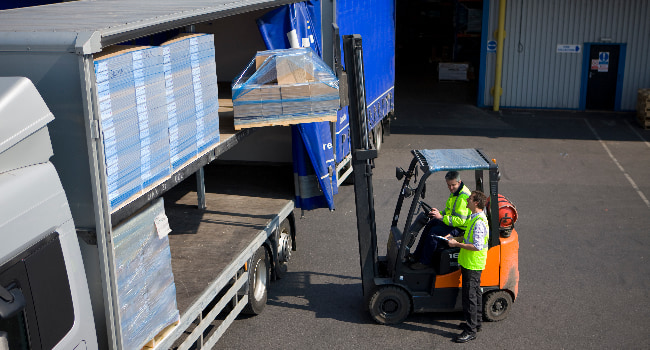
The core task of any lumper is the efficient unloading and loading of freight. When a truck arrives at a distribution center, the lumper crew gets to work immediately. They are experts in the physical demands of the job and use equipment like pallet jacks and forklifts to move goods quickly and safely.

This efficiency is crucial for warehouse operations. A slow unloading process can create a long line of trucks, causing delays that ripple through the supply chain. Professional lumpers are trained to optimize their workflow, ensuring the truck driver can get back on the road as fast as possible.

Here are some key aspects of their work:

  • Speed: Lumpers work to clear a trailer in a fraction of the time it would take an untrained person.
  • Safety: They use proper techniques to handle heavy or awkward items, preventing injuries and product damage.
  • Equipment Use: They are proficient with warehouse equipment, ensuring smooth and efficient movement of goods.

Unloading and Loading Freight Efficiently

Palletizing, Sorting, and Inventory Management

Beyond simply moving freight, lumpers perform crucial tasks that support inventory management. As goods come off the truck, they are often responsible for palletizing them—arranging boxes onto a pallet and shrink-wrapping them for stable movement and storage. This prepares the products for efficient handling within the warehouse.

They also play a key role in sorting. Lumpers will segregate products based on SKU, destination within the warehouse, or other criteria. This initial sort makes it much easier for your team to put items away correctly, ensuring that stock levels are accurately reflected in your warehouse management software.

This organizational work is vital for the order fulfillment process. By ensuring goods are properly sorted and palletized from the start, lumpers help maintain inventory accuracy. This means that when customer orders come in, the right products are in the right place, ready to be picked, packed, and shipped.

Supporting Documentation and Compliance Tasks

Lumpers also handle important documentation and compliance tasks associated with receiving freight. After a job is complete, the lumper service provider will issue a receipt for the lumper fees. This documentation is essential for accounting purposes, allowing the shipper or carrier to properly track and reimburse these shipping costs.

Compliance is another critical area. A professional service provider ensures their workers are trained to handle all types of cargo, including fragile items or even hazardous materials, according to industry regulations. This helps mitigate risks and ensures that all freight is handled safely and legally.

While a potential drawback of using lumpers can be disputes over fees, clear documentation helps prevent such issues. By providing a detailed record of the work performed and the associated cost, the service provider creates a transparent transaction. This professionalism ensures accountability and makes the entire process smoother for everyone involved.

Conclusion

In summary, data-driven lumper services play a pivotal role in the efficiency of modern logistics. By leveraging technology and data tracking, companies can enhance their freight handling processes, optimize warehouse operations, and ensure compliance with safety standards. The ability to make informed decisions based on data simplifies the coordination of tasks—from unloading to inventory management—ultimately leading to significant cost savings. As you consider implementing these services, remember that the right approach can transform your logistics systems into a powerhouse of productivity. If you’re ready to take your logistics to the next level, we encourage you to explore how data-driven lumper services can benefit your business today!

Frequently Asked Questions

Typically, the shipper or the receiver of the goods pays the lumper fees, not the truck driver. The cost is often passed on by the trucking company as part of the total transportation services cost. Fees are structured based on factors like the weight, size, and complexity of the load.

A lumper service provides specialized labor whose core competency is solely loading and unloading freight quickly and safely. General warehouse labor involves a broader range of tasks within warehouse operations, such as picking, packing, and stocking, and workers may lack the specialized efficiency of a professional lumper service provider.

If a carrier or driver has a dispute over lumper fees, they should first contact the lumper service provider’s customer support. It is important to have the receipt and any initial agreements on hand. A reputable provider will have a process in place to review the dispute and find a fair resolution.

Author Haley

Haley serves as the Marketing Manager for Complete Quality Solutions. She joined CQS in 2023 with her prior experience gained with GXO and XPO Logistics.

Share On :