(224) 213-5119
(513) 776-1078
Welcome to the world of warehousing, where efficiency is everything. Have you ever wondered what happens behind the scenes after your inventory arrives and before an order is shipped? Two critical, yet often overlooked, processes are putaway and replenishment. These functions are the true backbone of successful warehouse management. Getting them right is fundamental to streamlining your supply chain management, ensuring products are available, and keeping your operations running like a well-oiled machine. Let’s explore why these processes are so vital.
At its core, warehousing is about more than just storing products. It involves a series of coordinated activities that keep your inventory moving and your orders flowing. Effective warehouse management is a cornerstone of successful supply chain operations, ensuring that goods are received, stored, and shipped in the most efficient way possible.
Think of your warehouse as the central hub of your inventory management strategy. From the moment goods arrive at your receiving dock to the second they leave for delivery, every step must be optimized. This coordination is what turns a simple storage space into a dynamic and productive operational asset.
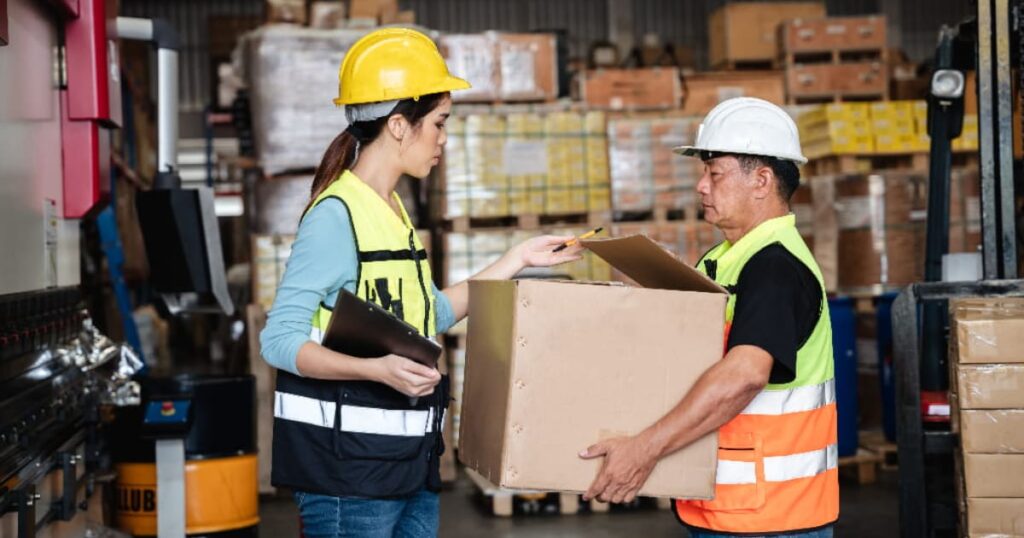
Why is efficiency in warehouse management so crucial? In today’s fast-paced market, customers expect quick and accurate deliveries. Any delay or error in your warehouse can ripple through the entire supply chain, leading to frustrated customers and potential loss of business. Efficient operations ensure that order fulfillment is swift and precise, directly boosting customer satisfaction.
Achieving this level of operational efficiency means every task, from storing items to picking orders, is performed without wasting time or resources. Third-party logistics (3PL) providers, for example, manage warehouse operations by leveraging advanced technology and trained teams. They implement standard operating procedures to streamline every function, from receiving to shipping, ensuring a smooth and reliable process for their clients.
Ultimately, a well-run warehouse is a competitive advantage. It allows you to process more orders, reduce operational costs, and adapt to changing market demands. By focusing on efficiency, you build a resilient foundation for your business’s growth and success.
Warehousing is a multi-faceted operation with several key components working in unison. Understanding these elements is the first step toward optimizing your supply chain management. Each function plays a specific role in the journey of a product through your facility.
From receiving new shipments to managing returns, every step requires careful coordination. The main goal is to maintain control over your inventory while ensuring it moves smoothly through the warehouse storage system.
Here are some of the essential components:
Thinking about setting up your own warehouse? It’s a significant undertaking that requires careful planning. One of the first decisions you’ll face is choosing from various warehouse locations. The right location can reduce transportation times and costs, making your supply chain operations more efficient. You must also consider the amount of warehouse space you’ll need, not just for now but for future growth.
Beyond location, you need to design an effective layout for your storage space. This includes planning for receiving docks, storage racks, picking aisles, and packing stations. The layout should facilitate a logical flow of goods to minimize travel time for your staff and equipment.
However, the high costs of real estate, construction, equipment, and staffing can be a major barrier. These expenses, along with the complexity of management, are why many businesses explore alternatives. Outsourcing to a 3PL, for instance, can offer significant cost savings and allow you to leverage expert infrastructure without the upfront investment.
Once new inventory is received, it can’t just sit on the loading dock. The putaway process is the next critical step in warehouse management. It involves moving goods from the receiving area to their designated storage locations within the warehouse.
This might sound simple, but a poorly executed putaway process can cause major headaches down the line. It impacts inventory accuracy, storage capacity, and the speed of the entire fulfillment process. Getting putaway right sets the stage for efficient supply chain management from the start.

The putaway function is the systematic process of moving items from the receiving dock to their optimal storage location. Its primary role is to ensure that inventory is stored correctly and its location is accurately recorded. This simple-sounding task is fundamental to all subsequent warehouse operations.
When putaway is done right, you maintain accurate inventory levels. Your team knows exactly where every item is, which is crucial for efficient picking and replenishment. A robust warehouse management system (WMS) is often used to direct workers to the best storage spot, optimizing space and ensuring products are easy to find.
Ultimately, an effective putaway process reduces the time it takes to locate items, minimizes the risk of lost or misplaced stock, and supports smooth supply chain operations. It’s the first step in organizing your warehouse for maximum productivity and accuracy.
Not all putaway processes are the same. The strategy you choose depends on your inventory management goals, the types of products you sell, and the layout of your warehouse space. Selecting the right approach is key to optimizing your order processing speed.
A good strategy, often guided by management software, aims to place items where they can be stored safely and retrieved quickly. Some businesses prioritize placing fast-moving items closer to packing stations, while others might focus on maximizing every inch of available space.
Here are a few common putaway strategies:
Modern putaway processes are powered by technology to enhance speed and accuracy. The most critical tool is the warehouse management system (WMS). This management software acts as the brain of the operation, directing employees on where to store each item for maximum efficiency.
To support the WMS, barcode scanning is almost universally used. When an item is received, its barcode is scanned to log it into the system. It’s scanned again when placed in its storage location, creating a real-time, accurate record of inventory. This simple action eliminates guesswork and manual data entry errors.
Increasingly, automation is also playing a role. Automated guided vehicles (AGVs) or conveyors can transport items from receiving to the storage area, freeing up human workers for more complex tasks. This integration of technology ensures the putaway process is as fast and error-free as possible.
While putaway deals with new inventory, replenishment focuses on existing stock within your fulfillment center. Replenishment is the process of moving items from bulk storage areas to more accessible, forward-picking locations. Think of it as restocking the shelves in a retail store, but on a much larger scale.
This function is vital for keeping the order fulfillment process running smoothly. Without timely replenishment, your pickers may arrive at a bin to find it empty, causing delays and disrupting your entire inventory management system. A smart replenishment strategy ensures your most-needed items are always ready for picking.

The replenishment function is a proactive process designed to maintain optimal inventory levels in your primary picking locations. It involves monitoring stock in these forward-facing bins and, when they fall below a certain threshold, moving more units from bulk warehouse storage to fill them back up.
This process is critical for preventing interruptions in the order fulfillment cycle. If a picker cannot find an item because its primary location is empty, the entire order is delayed. This creates a bottleneck in your supply chain and can negatively impact customer satisfaction.
By systematically moving goods from reserve storage to picking areas, replenishment ensures that your team always has access to the products they need. It keeps the picking process fluid and efficient, directly contributing to your ability to meet delivery promises.
Just like putaway, there are several methods for inventory replenishment. The best one for your warehouse management will depend on your order volume, product variety, and overall logistics operations. The goal is to keep stock levels in picking areas optimized without creating congestion.
These methods are often triggered by data from a WMS, which tracks stock levels in real time. The system can automatically create a replenishment task when a bin hits a pre-set minimum quantity, ensuring the process is driven by actual demand.
Some common replenishment methods include:
It’s easy to confuse replenishment and order picking, as both involve moving inventory. However, they serve two distinct purposes in warehouse management. Understanding the difference is key to optimizing your entire fulfillment process.
Replenishment is an internal stock movement. Its purpose is to move goods from a reserve storage location to a forward-picking location. The goal is to ensure the picking process is never halted due to an empty bin. It is a preparatory step for future orders.
In contrast, the picking process is a customer-facing activity. It involves retrieving items from picking locations to fulfill a specific customer order. This is a direct step in the order fulfillment journey. In short, replenishment stocks the shelf, while picking takes from the shelf to complete an order.
Putaway and replenishment are not independent tasks; they are deeply connected processes that influence each other. An efficient putaway process makes for a smoother replenishment cycle. When you know exactly where every item is stored in bulk, you can retrieve it quickly for replenishment.
This synergy is vital for effective warehouse management and a responsive supply chain. Optimizing both functions together ensures that your inventory flows seamlessly from receiving to shipping. This coordination is the hallmark of a high-performing warehouse and is essential for timely order fulfillment. The following sections will explain how they work together.
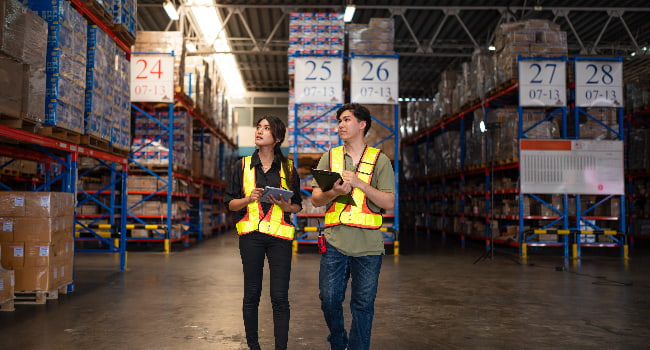
A seamless flow of inventory is the ultimate goal of any warehouse. This begins the moment stock arrives. An efficient putaway process places items in logical locations, making them easy to track and access. When items are stored correctly, the replenishment process becomes much faster.
This direct link between putaway and replenishment has a major impact on your overall operational efficiency. If putaway is slow or inaccurate, replenishment teams will waste time searching for stock. These delays disrupt supply chain operations and slow down order processing, as pickers wait for bins to be refilled.
By synchronizing these two activities, you create a fluid path for your products. Inventory moves predictably from receiving to back-stock, then to forward-picking locations, and finally out the door in a customer’s order. This smooth flow minimizes handling time, reduces errors, and keeps inventory levels balanced.
One of the biggest challenges in inventory management is balancing stock levels. You need enough product to meet demand but not so much that it ties up capital and space. Effective putaway and replenishment are your first line of defense against stockouts and overstocks.
Accurate putaway ensures your system’s inventory count is correct from the start. Timely replenishment then moves that stock to where it’s needed, preventing a situation where an item is in the building but unavailable for picking. This coordination is crucial for a positive customer experience and effective cost control. A well-managed system helps you:
Properly managing these functions is a core principle of modern supply chain management, ensuring you have the right product, in the right place, at the right time.
To truly optimize warehouse management, you need to synchronize the schedules for putaway and replenishment. Performing these tasks at the wrong time can lead to aisle congestion, slow down other logistics operations, and reduce overall productivity.
For example, many warehouses schedule bulk replenishment during off-peak hours or overnight. This ensures that picking aisles are clear for order fulfillment teams during the busiest parts of the day. Similarly, putaway can be scheduled in waves to prevent the receiving dock from becoming a bottleneck.
This level of coordination is almost impossible without advanced management software. A WMS can analyze order volumes and staffing levels to suggest the most efficient times for each task. It can automatically generate and prioritize putaway and replenishment tasks to ensure that your warehouse operates in a smooth, synchronized rhythm.

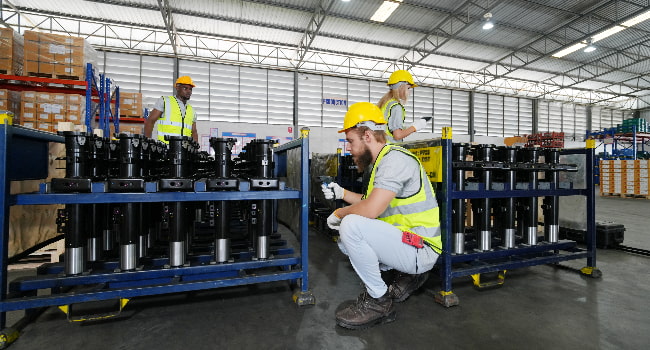
While technology is crucial, the success of putaway and replenishment ultimately depends on your warehouse workers. These individuals are on the front lines, physically moving products and ensuring the accuracy of every transaction. Their diligence and efficiency are essential for smooth order fulfillment.
A well-trained and motivated team is the engine of your supply chain management. From operating equipment safely to collaborating across departments, their contributions directly impact your warehouse’s performance. Let’s look at the specific roles and responsibilities that make it all happen.
A reach truck operator is a specialized warehouse worker who plays a key role in both putaway and replenishment. These operators are skilled at navigating narrow aisles and vertically accessing high storage racks, making them essential for maximizing warehouse space.
Their primary job is to move pallets of goods safely and efficiently. During putaway, they transport inventory from the receiving area to its designated high-density storage location. For replenishment, they retrieve pallets from these reserve locations and move them to forward-picking areas. Their accuracy is vital for inventory management.
Key responsibilities of a reach truck operator include:
Their work is fundamental to keeping the fulfillment process moving, especially in warehouses with tall racking systems.
Effective training and strict safety protocols are non-negotiable in warehouse management. Warehouse workers must be thoroughly trained not only on how to perform their tasks but also on how to do them safely. This includes proper lifting techniques, equipment operation, and emergency procedures.
Training should also cover the use of technology, such as handheld scanners and management software. When employees understand how their actions impact the inventory management system, they are more likely to perform scans correctly, which is critical for data accuracy. Consistent training ensures everyone follows standard operating procedures.
Safety protocols are equally important. Warehouses can be hazardous environments, with heavy machinery and stacked goods. Clear rules for traffic flow, personal protective equipment (PPE), and equipment maintenance protect your warehouse workers from injury and your business from liability. A safe warehouse is a productive warehouse.
No single department in a warehouse works in a silo. Smooth supply chain operations depend on seamless collaboration between all teams. The receiving team must communicate effectively with the putaway team, which in turn must coordinate with the replenishment and order fulfillment teams.
This collaboration is key to solving problems quickly. For example, if the receiving team finds a discrepancy in a shipment, they need to alert the inventory team immediately. If pickers notice a bin is consistently running low, they should inform the replenishment planners. This flow of information helps optimize warehouse management.
Ultimately, every team member is working toward the same goal: excellent customer service. When teams collaborate effectively, orders are processed faster and more accurately. This teamwork ensures that the warehouse operates as a single, cohesive unit, capable of meeting and exceeding customer expectations.

Technology has revolutionized warehouse operations, and its impact on putaway and replenishment is profound. Modern management software, like a warehouse management system (WMS), provides the intelligence and visibility needed to orchestrate these complex tasks with precision.
From directing workers to the most efficient path to automating the movement of goods, technology is the key to unlocking new levels of productivity. The use of automation and data-driven tools has transformed inventory management, making it more accurate and responsive than ever before. Let’s explore some of these game-changing technologies.
A Warehouse Management System (WMS) is the central nervous system of a modern warehouse. This powerful warehouse management software directs, tracks, and manages all operations, from receiving to shipping. For putaway and replenishment, its role is indispensable.
When new inventory arrives, the WMS determines the optimal storage location based on factors like size, weight, and sales velocity. It then directs a worker to that location, ensuring efficient use of space and logical organization. For replenishment, the WMS monitors inventory levels in picking bins and automatically generates tasks when stock runs low.
By providing real-time data and process control, a WMS enhances every aspect of inventory management. It minimizes human error, improves productivity, and provides valuable insights for optimizing supply chain operations. Many systems also integrate with automation technologies for even greater efficiency.
How does a WMS keep track of everything so accurately? The answer lies in technologies like barcode scanning and Radio Frequency Identification (RFID). These tools provide the real-time data that powers modern inventory management.
Barcode scanning is the most common method. Workers use handheld scanners to capture data at every touchpoint: receiving, putting away, moving, picking, and shipping. Each scan updates the management software instantly, providing a precise, digital footprint of every item’s journey. This simple act drastically reduces manual errors and improves order processing accuracy.
RFID is a more advanced technology that uses radio waves to read tags, often without a direct line of sight. This allows for faster data capture, such as scanning an entire pallet at once. Both technologies serve the same core purpose:
Automation and robotics are taking warehouse management to the next level. These technologies handle repetitive and physically demanding tasks, allowing human workers to focus on more complex activities. In putaway and replenishment, automation can lead to significant gains in operational efficiency and cost savings.
Automated systems like conveyors or Automated Storage and Retrieval Systems (AS/RS) can transport and store goods with incredible speed and precision. Robots can be used to move shelves to workers or even perform picking and sorting tasks. This level of automation reduces labor costs and minimizes the risk of human error.
By integrating automation, warehouses can operate faster and more accurately, 24/7. It’s a key strategy for businesses looking to scale their operations and stay competitive in a demanding market.
| Feature | Manual Process | Automated Process |
| Speed | Limited by human walking and lifting speed. | Consistently fast, operates 24/7 without breaks. |
| Accuracy | Prone to human error (e.g., wrong location, incorrect count). | Extremely high accuracy, guided by WMS data. |
| Labor | Labor-intensive, high dependency on staff availability. | Reduces reliance on manual labor for repetitive tasks. |
| Safety | Higher risk of workplace injuries from lifting and movement. | Reduces physical strain and risk of accidents for workers. |

For many businesses, managing a warehouse in-house is a major challenge. This is where third party logistics (3PL) providers come in. These companies offer a range of outsourced logistics services, including warehousing, transportation services, and complete supply chain management.
By partnering with a 3PL, you can hand over the complexities of putaway, replenishment, and order fulfillment to experts. This allows you to leverage their infrastructure, technology, and experience to improve your logistics without the massive upfront investment. We’ll explore how 3PLs can transform your warehousing activities.
So, what does third-party logistics mean and how does it work? A 3PL is a company you partner with to outsource part or all of your supply chain management. These specialized logistics providers handle functions like warehousing, inventory management, order fulfillment, and transportation management on your behalf.
The process is straightforward. You send your inventory to the 3PL’s warehouse. When a customer places an order on your website, the order is sent directly to the 3PL’s system. Their team then picks, packs, and ships the order directly to your customer. They handle everything from storing your products to coordinating with shipping carriers.
Essentially, a 3PL acts as the operational arm of your business, managing the complex logistics so you don’t have to. This allows you to focus on other core areas like product development, marketing, and sales, while experts handle the logistics.
Third-party logistics providers are experts in efficient warehouse management, and their putaway and replenishment processes are typically highly optimized. When your inventory arrives at their warehouse, their trained teams use advanced systems to execute the putaway process with speed and precision, ensuring your products are stored correctly and are immediately available for sale.
These logistics services are designed for maximum efficiency. 3PLs use sophisticated inventory management software to direct their putaway and replenishment activities. This ensures that fast-moving products are placed in easily accessible locations and that picking bins are always stocked.
By entrusting these tasks to a 3PL, you benefit from their established best practices and technology. Their entire fulfillment process is built to minimize errors and delays, ensuring that your inventory flows smoothly from receiving to shipping. This professional handling is a key advantage of using a 3PL.
What are the main benefits of using a 3PL company for your warehousing needs? Partnering with logistics providers offers numerous advantages, especially for growing businesses. One of the biggest benefits is significant cost savings, as you avoid the high costs of owning or leasing a warehouse, hiring staff, and purchasing equipment.
These service providers also bring expertise and technology that might be too expensive to develop in-house. This leads to more efficient order fulfillment, fewer errors, and faster delivery times, all of which improve the customer experience.
Here are some of the main benefits:

The decision to partner with logistics providers is often a strategic one, driven by the desire for efficiency and growth. Many companies realize that managing logistics in-house distracts them from their core competencies, such as product design and marketing. Outsourcing allows them to refocus their energy where it matters most.
Furthermore, 3PLs offer substantial cost savings and the flexibility to scale operations as the business grows. For companies looking to expand their customer base into new regions, a 3PL with a network of warehouses can be an invaluable partner.
Why would a business choose a 3PL instead of handling logistics in-house? Managing your own warehouse involves significant investment and risk. You have to buy or lease space, purchase equipment, hire and train staff, and implement complex software. A 3PL eliminates these massive upfront costs.
Beyond the initial cost savings, 3PLs offer operational expertise that is difficult to replicate. Their entire business is focused on perfecting logistics operations. This specialization leads to greater efficiency, fewer errors, and a better overall customer experience compared to what most companies can achieve on their own.
Here are some key advantages over managing your own warehouse:
Many of the world’s most successful companies, both large and small, use third-party logistics. For example, major players like FedEx Supply Chain and UPS Supply Chain Solutions offer a comprehensive range of services to businesses across various industries. These giants handle everything from warehousing to international freight for their clients.
In the world of ecommerce fulfillment, Amazon’s FBA (Fulfillment by Amazon) service is a prime example. Thousands of online sellers store their products in an Amazon fulfillment center, and Amazon handles the entire picking, packing, and shipping process for them. This allows even small businesses to offer fast, reliable shipping.
Other notable logistics services providers include DHL Supply Chain and XPO Logistics, which manage complex supply chains for global corporations. These examples show that businesses of all sizes can benefit from outsourcing their logistics to a specialized partner.
Third-party logistics providers are masters of operational efficiency, and this is clearly seen in how they handle putaway and replenishment. They leverage powerful warehouse management system (WMS) software to orchestrate these tasks with near-perfect precision, which is a core part of their fulfillment solutions.
Upon receiving your inventory, a 3PL’s WMS instantly determines the most strategic storage location. This decision is based on data like product velocity, size, and weight, ensuring that fast-moving items are ready for quick picking. This data-driven approach eliminates guesswork and maximizes space.
For replenishment, the WMS constantly monitors stock levels and automatically triggers tasks to move items from bulk storage to picking bins before they run low. This proactive management prevents stockouts at the picking face, ensuring smooth supply chain operations and uninterrupted order fulfillment.

Optimizing putaway and replenishment isn’t a one-time fix; it’s a process of continuous improvement. To achieve peak efficiency, you need to focus on a few key factors. This includes choosing the right strategies, using data to make informed decisions, and constantly measuring your performance.
By tracking key performance indicators (KPIs), you can identify bottlenecks and areas for improvement in your warehouse management. This data-driven approach is essential for effective cost control and maintaining smooth supply chain operations. Let’s look at how you can fine-tune these critical processes.
The first step in optimization is selecting the right strategies for your unique operation. There is no one-size-fits-all solution; the best approach depends on your business model, product characteristics, and the nature of your customer orders.
For example, a business with a few high-volume products might benefit from a fixed-bin strategy where items are always in the same place. In contrast, a company with a vast and ever-changing product catalog might prefer a chaotic storage system managed by a WMS. Your choice will have a direct impact on your supply chain management efficiency.
Consider these factors when choosing your strategies:
In modern warehouse management, data is your most valuable asset. Your management software collects a wealth of information on every movement and transaction within your facility. Leveraging data analytics allows you to turn this raw information into actionable insights for optimizing your supply chain operations.
By analyzing putaway and replenishment data, you can identify trends and patterns. For instance, you might discover that certain products are frequently replenished, suggesting they should be stored in a more accessible location. Or you might find that a particular aisle is often congested, indicating a need to adjust workflow or timing.
Data analytics helps you move from reactive problem-solving to proactive optimization. You can forecast labor needs, adjust inventory levels, and refine storage strategies based on hard evidence rather than intuition. This data-driven approach is key to building a smarter, more efficient warehouse.


You can’t improve what you don’t measure. Establishing and tracking Key Performance Indicators (KPIs) is essential for continuous improvement in your warehouse. These metrics provide a clear picture of how well your putaway and replenishment processes are performing.
Common KPIs include putaway accuracy, putaway cycle time, replenishment accuracy, and inventory turnover. By monitoring these numbers, you can set performance benchmarks, identify areas that need attention, and measure the impact of any changes you make. This is a fundamental practice for effective cost control and operational excellence.
Your warehouse management software can often track these KPIs automatically and present them in easy-to-read dashboards. Regularly reviewing these metrics with your team helps foster a culture of accountability and continuous improvement, ultimately leading to higher efficiency and greater customer satisfaction.
In summary, effective putaway and replenishment processes are crucial for maintaining an efficient warehousing operation. By understanding the interplay between these functions and leveraging technology, businesses can ensure a seamless inventory flow, minimize stockouts, and optimize overall performance. The role of warehouse personnel and collaboration across teams cannot be underestimated, as they form the backbone of these operations. Whether you choose to manage logistics in-house or partner with a third-party logistics provider, prioritizing these essential components will lead to significant enhancements in your warehousing efficiency. For those looking to elevate their warehousing strategies, now is the time to implement these best practices and watch your operational success grow.
Understanding the nuances of warehouse operations can bring clarity to common queries. For instance, many wonder about the best strategies to optimize inventory management and enhance order fulfillment. Others inquire about how warehouse management software can improve operational efficiency and cost control in logistics operations. Additionally, questions regarding the impact of efficient put-away and replenishment on customer satisfaction frequently arise. Addressing these inquiries surrounding shipping strategies, inventory levels, and distribution services can lead to better customer experiences and a well-rounded understanding of the supply chain landscape.
In a 3PL warehouse, inventory replenishment is typically automated through a warehouse management system. The system monitors stock levels in picking locations and automatically creates tasks to move items from bulk storage when quantities fall below a set threshold. This ensures a smooth supply chain for uninterrupted order fulfillment.
When selecting logistics providers, look for industry experience, a range of services that fit your needs, and scalable solutions. Evaluate their technology, warehouse network, and pricing transparency. Strong customer references and clear service level agreements are also crucial for ensuring a successful partnership and achieving cost savings.
Yes, challenges include labor shortages, inaccurate inventory management, and poor process design, which can lead to delays in order fulfillment. A lack of proper technology or training can cause misplaced items and inefficient workflows, disrupting supply chain management and negatively impacting customer service.

Haley serves as the Marketing Manager for Complete Quality Solutions. She joined CQS in 2023 with her prior experience gained with GXO and XPO Logistics.